
Treatment of FRDA in Huizhou
Friedreich's ataxia rehabilitation at NeuroLife Huizhou focuses on coordination training, balance, and maintenance of functional capabilities in this progressive disease. We work with motor disturbances (ataxia, dysarthria), associated scoliosis and foot deformities, and gentle TCM approaches to support cardiac function — cardiomyopathy remains the main cause of complications in FRDA.
What is Friedreich's Ataxia?
Friedreich's ataxia (FRDA) is the most common hereditary ataxia, while still a rare disease (1 in 50000). ICD-10 code G11.1. The underlying cause is an autosomal recessive mutation in the FXN gene on chromosome 9q21.11, encoding the mitochondrial protein frataxin. Frataxin deficiency disrupts iron-sulfur metabolism in mitochondria and produces progressive degeneration of the posterior spinal columns, dentate nuclei of the cerebellum, peripheral nerves, and cardiac muscle.
Onset is typically at ages 5–15 (late-onset forms are also known), and the course is progressive: the mean age of losing independent ambulation is about 25 years from onset. There is as yet no disease-modifying therapy that fully stops the disease — in 2023 the FDA approved the first drug (omaveloxolone / Skyclarys), which slows progression; gene and cell therapies are on the horizon. Rehabilitation already today significantly affects quality of life, extends functional capabilities, and preserves independence.
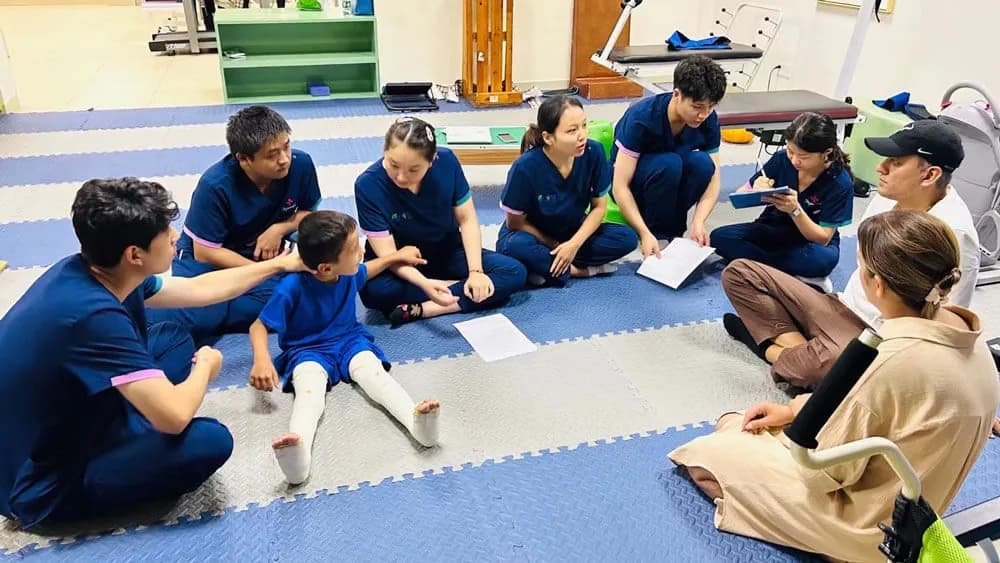
At NeuroLife Huizhou the program is built around the disease stage and is run regularly, two courses per year, in parallel with the core treatment. The program combines several streams:
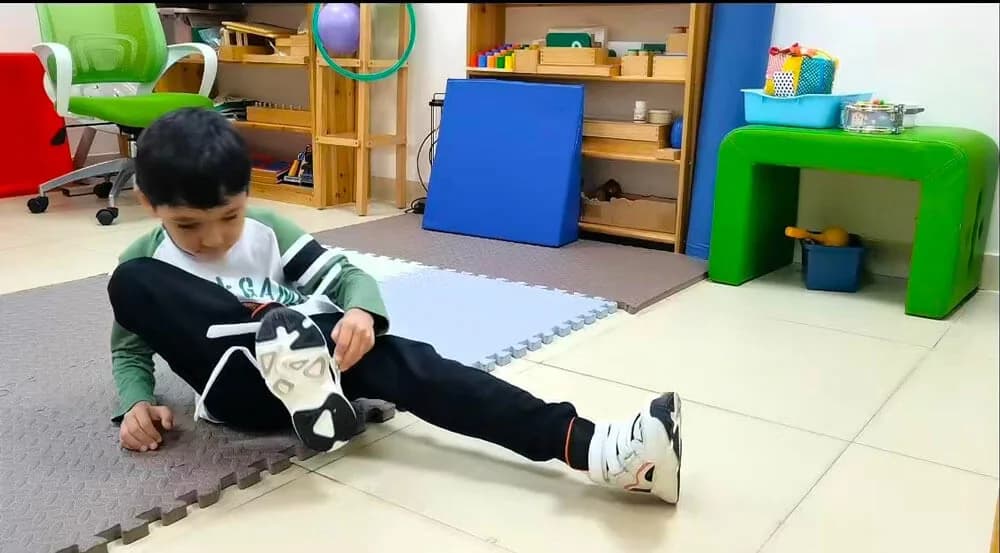
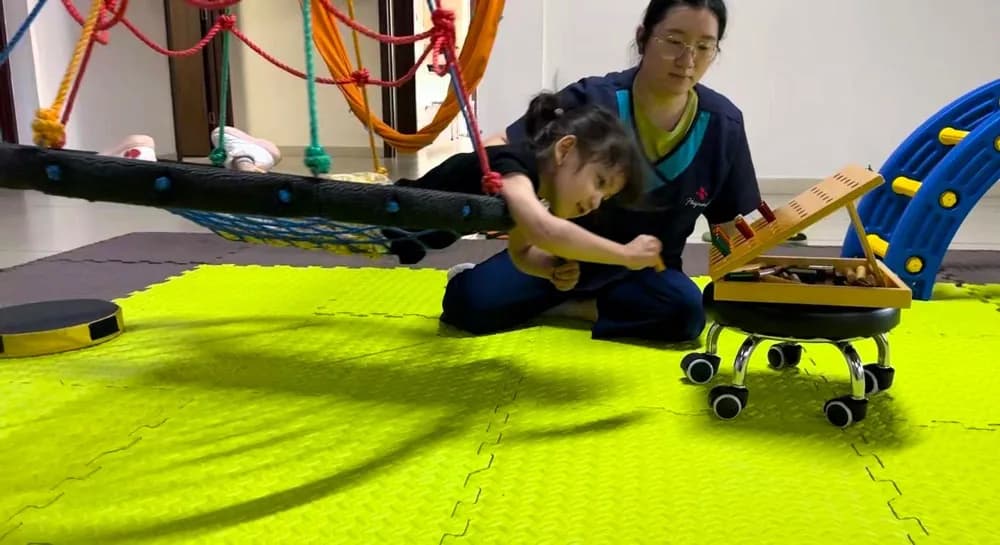
- Coordination training — exercises for movement timing, accuracy, and smoothness (critically important in ataxia);
- Balance therapy — stabilometric platforms, exercises on unstable surfaces, proprioceptive stimulation;
- Occupational therapy — selecting assistive devices (special walkers, stabilizers, weighted utensils);
- Therapeutic exercise and physiotherapy — preserving muscle mass and joint mobility, massage;
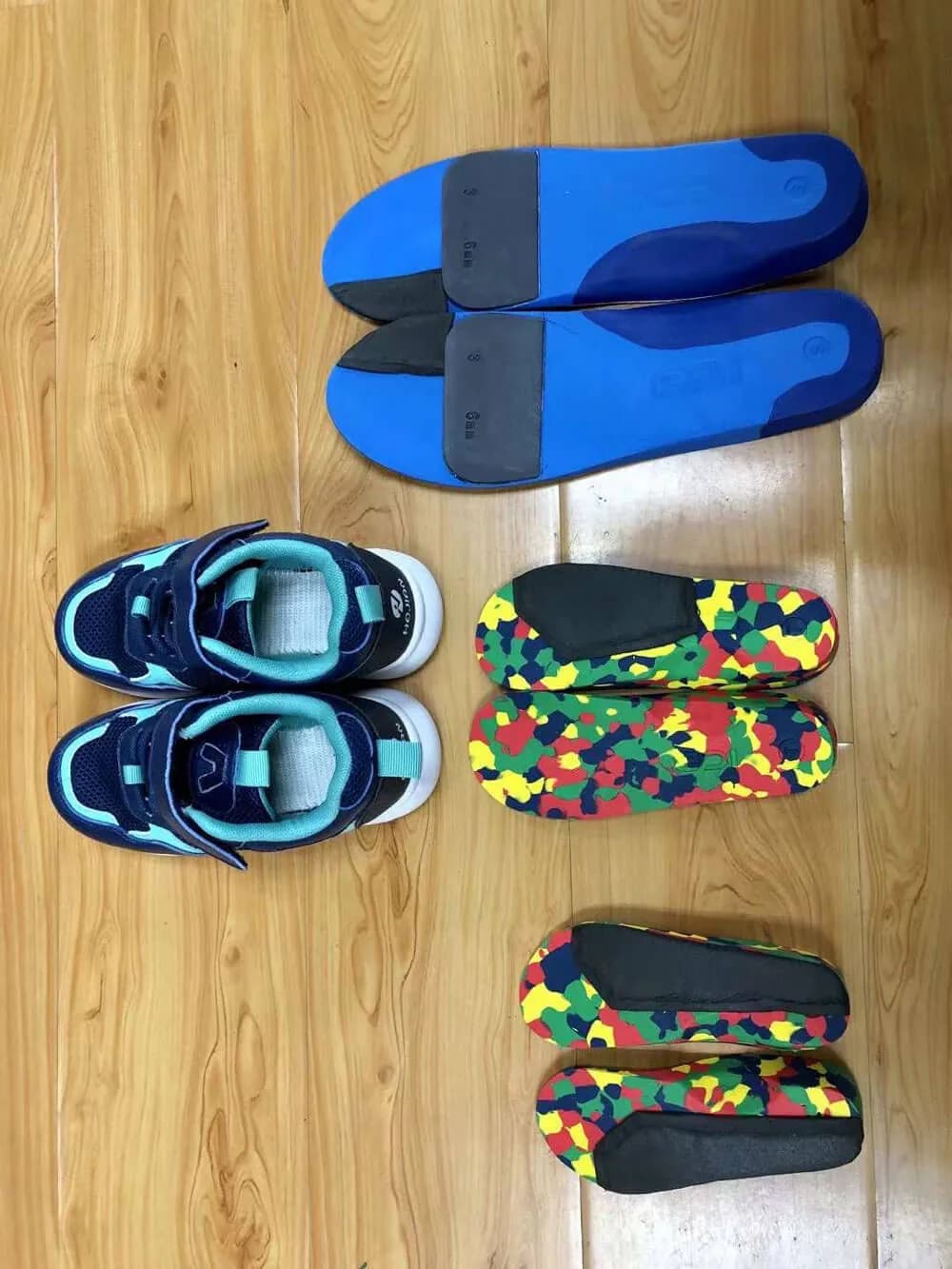
- Orthopedic support — a custom orthosis and posture work for scoliosis, and biomechanical insoles for pes cavus;
- Gentle TCM approaches to support the heart — acupuncture at cardiac points, lymphatic drainage massage, herbal blends.
The TCM component requires special attention: hypertrophic cardiomyopathy develops in about 40% of patients and remains the main cause of complications. Workload intensity and cardiac work are therefore coordinated with the pediatric cardiologist (annual echocardiography, ECG monitoring) and the endocrinologist (diabetes risk), and the methods complement one another and are reviewed over the course of the program.
Causes
Autosomal recessive mutation in the FXN gene on chromosome 9q21.11. In 95% of patients — GAA repeat expansion in the first FXN intron (normal — up to 33 repeats, FRDA — 66 to 1700+ repeats on both alleles). This reduces expression of the mitochondrial protein frataxin, disrupts iron-sulfur metabolism, and gradually causes death of neurons and cardiomyocytes. Carrier rate is about 1 in 60–100 in populations of European descent.
Symptoms
Progressive ataxia — impaired coordination (of arms, legs, trunk), staggering wide-based gait, dysmetria (overshoot in goal-directed movements). Dysarthria (slurred speech). Loss of deep sensation (vibratory, joint-position). Scoliosis. Pes cavus. Reduced or absent tendon reflexes. Gradually — cardiomyopathy (dyspnea, arrhythmias), diabetes, vision and hearing impairments.
Diagnostics
The gold standard is FXN genetic analysis (GAA repeat counting). Additional — brain and spinal cord MRI (cerebellar and posterior spinal column atrophy), EMG (characteristic axonal pattern), nerve conduction, echocardiography and ECG (mandatory annually for cardiomyopathy detection), function assessment by the SARA (Scale for the Assessment and Rating of Ataxia) or FARS scale, lab work — fasting glucose and HbA1c for diabetes screening.
Prognosis
The disease is progressive. The mean age of losing independent ambulation is about 25 years from onset. The main cause of mortality is cardiomyopathy and related arrhythmias. Modern therapy (omaveloxolone since 2023) slows progression, and regular rehabilitation significantly affects functional independence and quality of life. Cardiologist coordination is critical — timely management of cardiac complications meaningfully impacts life expectancy.
How we treat
Diagnostics
Comprehensive examination and patient assessment by an international team of specialists
Treatment plan
Development of an individual rehabilitation program considering diagnosis specifics
Therapy
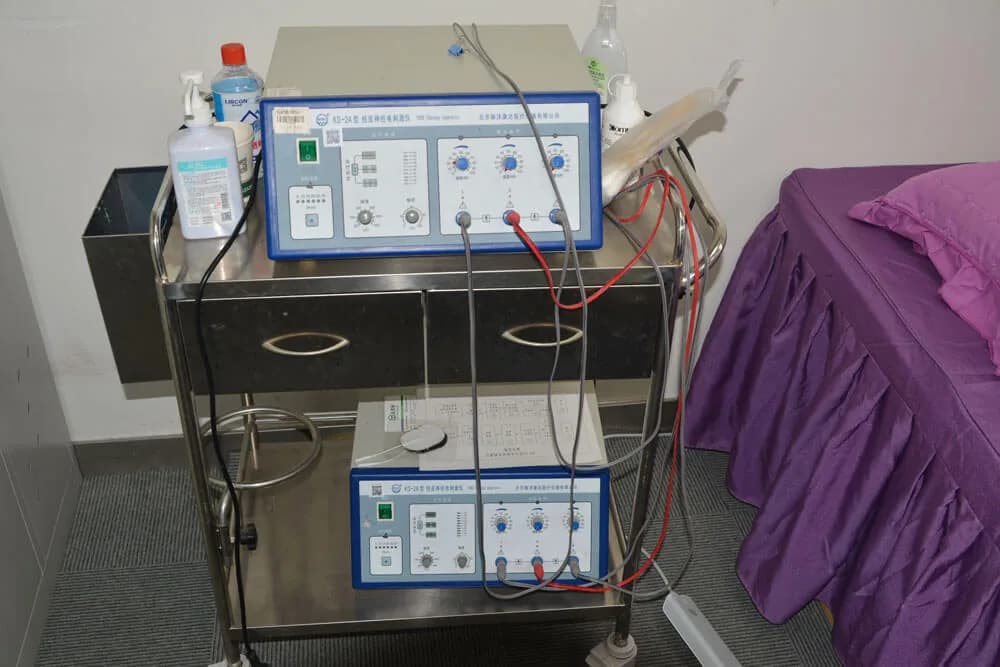
Intensive course of procedures: physical therapy, massage, physiotherapy, acupuncture and other methods
Results
Progress evaluation, home recommendations and maintenance therapy plan
Procedures for treating Friedreich's Ataxia
Questions about treatment of Friedreich's Ataxia
Related diagnoses
Other directions in this category — pick the most relevant one
Book a free consultation
A doctor will review your documents and provide recommendations within 30 minutes.