
Occupational Therapy
OT covers daily-living skills, fine motor work, sensory tasks, social interaction and adaptation of home and school environments.
How the procedure works
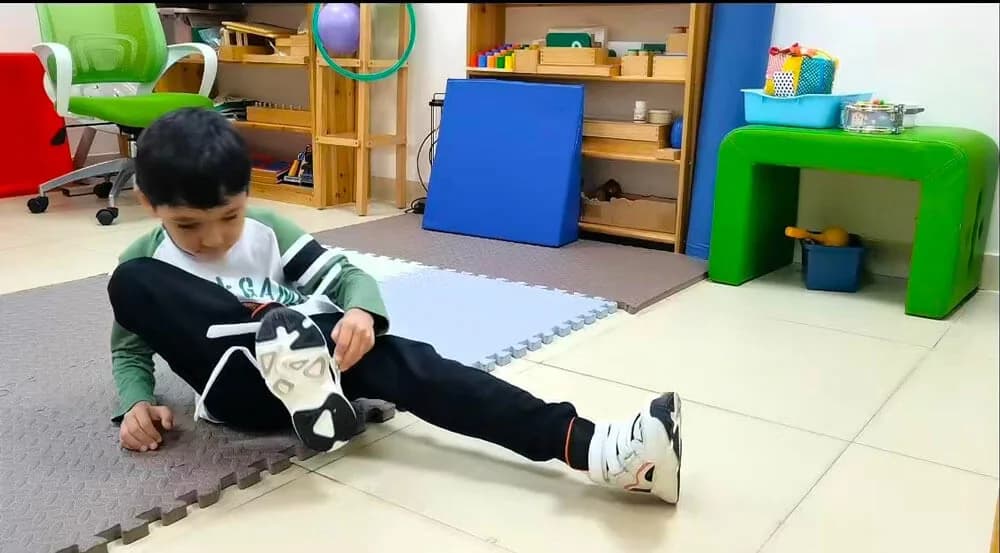
Occupational therapy (OT) is a rehabilitation discipline focused not on individual muscles or diagnoses but on the child's ability to perform everyday tasks: dressing, eating, playing, learning, communicating. At our centre the OT programme is assembled around the child's individual profile and covers fine motor work (modelling, drawing, threading, construction play), gross motor and coordination training, sensory integration, cognitive functions and social skills. In parallel we train the family and educators: which assistive devices to install at home, how to set up a desk in the classroom, how to support the child's independence. The set of techniques and the pace are tailored to the child's individual profile — from training self-care skills (ADL, Activities of Daily Living) to functional behaviour analysis and play therapy.
OT assessment
Motor skills, attention and perception are assessed through play-based tasks. A parent interview surfaces practical pain points at home.
Individual plan
Exercises and adaptive equipment are tailored to the child's profile. Each goal is concrete: «button a shirt», «print letters», «play with peers».
Environment adaptation
Recommendations are given for the home and classroom: desk height, weighted utensils, tactile balls. Parents and educators receive techniques to support the child's independence.
How Sessions Look
Indications and contraindications
Indications
Contraindications
Who performs the procedure

Shen Xiaoli沈小丽
Head of the Occupational Therapy Department. Specialization: hand function development, activities of daily living

Liu Ling刘玲
Instructor. Specialization: development of hand function, activities of daily living (ADL)

Sun Jianing孙佳宁
Instructor. Specialization: hand function development, activities of daily living
What diagnoses it helps with Occupational Therapy
Book a free consultation
A doctor will review your documents and provide recommendations within 30 minutes.