
Biomechanical Insoles
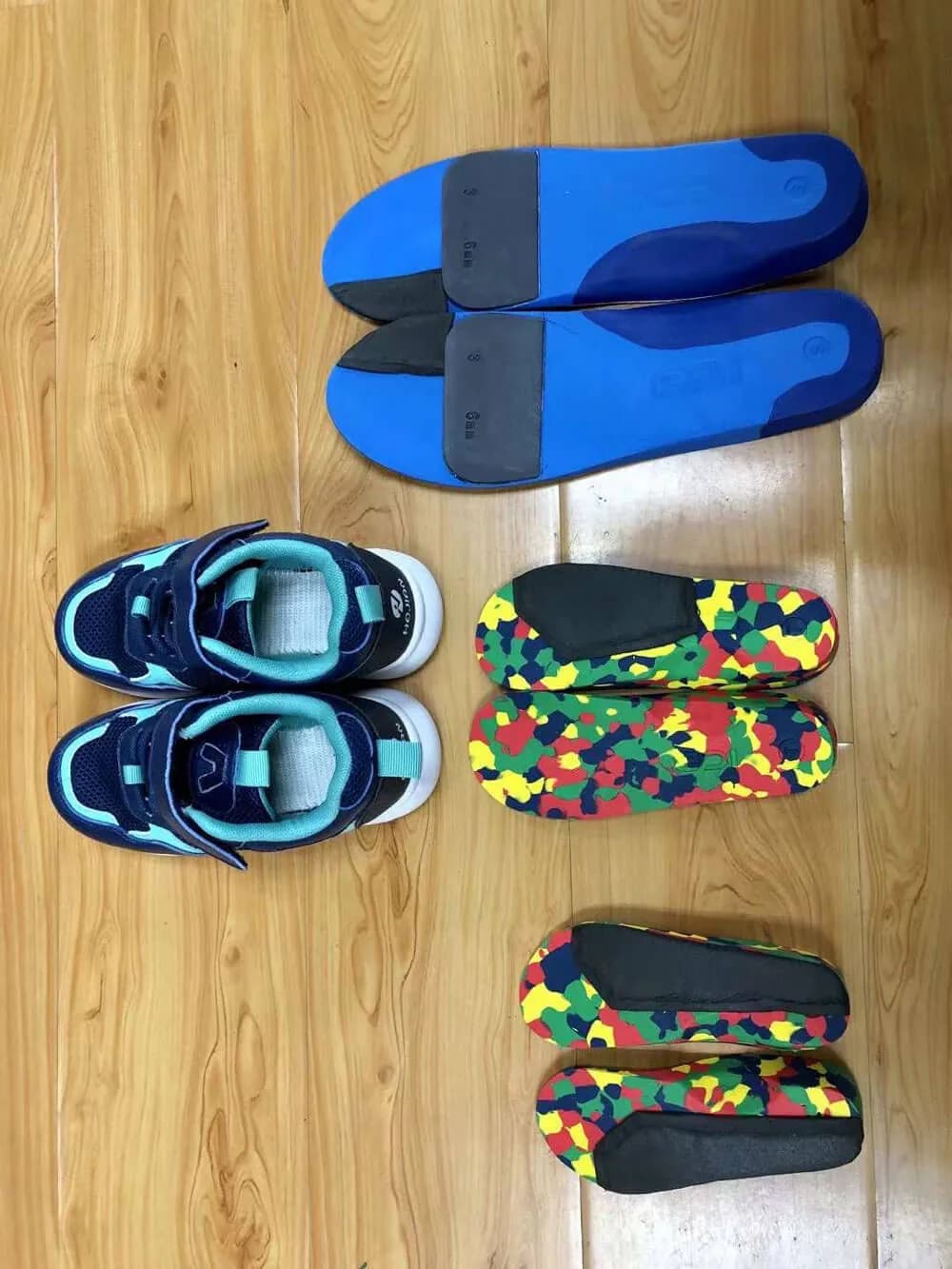
Insoles are produced for the child's individual foot and gait. Arch support, deformity correction and spinal off-loading.
How the procedure works
Biomechanical orthopaedic insoles are a modern solution grounded in human biomechanics, designed to comprehensively improve the foot and the wider musculoskeletal system. At our Huizhou centre insoles are made individually, accounting for foot shape, gait characteristics and specific issues (flat feet, high arches, deformities). The insoles deliver four core functions. First — optimised load distribution: individual shape and structure normalise pressure, preventing pain, callosities and discomfort. Second — correction of mild deformities: in flat feet or high arches the insole provides the necessary support and helps restore normal anatomy. Third — improved posture and balance through alignment of the lower-limb force line: load on the lumbar spine, knees and hips is reduced. Fourth — greater stability in motion: the insole supports the foot during walking, running and active play, reducing injury risk. Each pair is matched to the child's individual foot and gait profile, and as the child grows the insoles are revised for the new size and activity level.
Foot and gait analysis
Foot shape, arches, gait pattern, step symmetry and load on the knees and lumbar spine are assessed.
Fabrication
An impression or 3D scan is taken; individual insoles are formed considering identified issues and the child's activity.
Adaptation and follow-up
Adaptation takes 1–2 weeks. Follow-ups every six months: children grow and insoles are renewed for the new size and activity profile.
How Sessions Look
Indications and contraindications
Indications
Contraindications
Who performs the procedure

Dong Mingcheng董明程
Head of the Neurolife International Pediatric Rehabilitation Center. Specialization: Neurorehabilitation specialist, Orthopedist

Liu Hejian刘合建
One of the founders of the Neurolife center. Expert in pediatric rehabilitation.

Liu Jing刘晶
Head of the Physical Therapy Department. Specialization: foot and ankle, posture and gait
What diagnoses it helps with Biomechanical Insoles
Book a free consultation
A doctor will review your documents and provide recommendations within 30 minutes.