
Physical Therapy
Individual PT programmes for cerebral palsy, post-TBI sequelae, genetic disorders and orthopaedic conditions in Huizhou.
How the procedure works
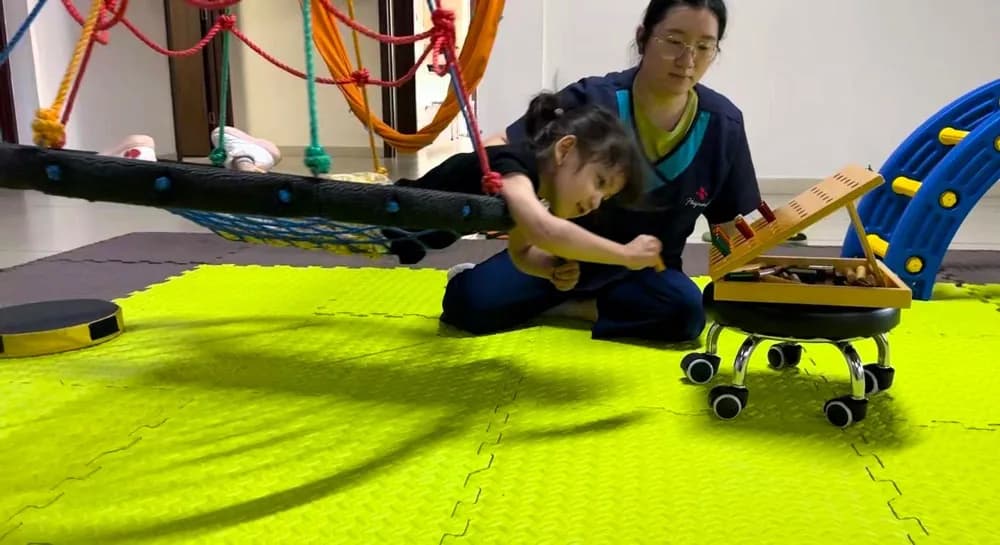
Physical therapy (PT) is the foundation of rehabilitation for paediatric motor impairments. It is applied for motor development delay, nervous-system disorders (cerebral palsy, post-TBI), musculoskeletal disorders (scoliosis, torticollis, post-fracture rehabilitation), genetic conditions (Down syndrome, SMA, muscular dystrophies) and foot deformities. In Huizhou the PT programme is individualised by age, diagnosis and current condition. The toolkit covers therapeutic gymnastics, gentle manual therapy techniques, several massage modalities, assistive devices (orthoses, walkers, crutches) and play therapy to sustain motivation. The specific set of techniques is selected to fit the child's individual profile — age, diagnosis, current condition and rehabilitation goals.
Motor assessment
Muscle tone, joint range of motion, gait patterns and posture are evaluated using standardised scales — GMFCS and MACS.
Training
An individual exercise programme covers stretching, strengthening, coordination and balance, alongside gentle manual therapy and play-based elements.
Home programme
Parents receive a concise list of 10–15-minute daily exercises with a walkthrough of technique and selection of assistive devices.
How Sessions Look
Indications and contraindications
Indications
Contraindications
Who performs the procedure

Liu Jing刘晶
Head of the Physical Therapy Department. Specialization: foot and ankle, posture and gait

Ning Zhiyun宁志云
Physical Therapy Methodologist. Specialization: working with the dyskinetic form of cerebral palsy and spastic quadriparesis

Guo Jinpeng郭金鹏
Head of the Physical Therapy Department. Specialization: Bobath concept, Vojta therapy, PNF, conductive education (Peto method)
What diagnoses it helps with Physical Therapy
Book a free consultation
A doctor will review your documents and provide recommendations within 30 minutes.