
Apparatus Physiotherapy
Low- and mid-frequency electrotherapy, cerebellar stimulation, ultra-short-wave therapy, multifunctional limb physiotherapy.
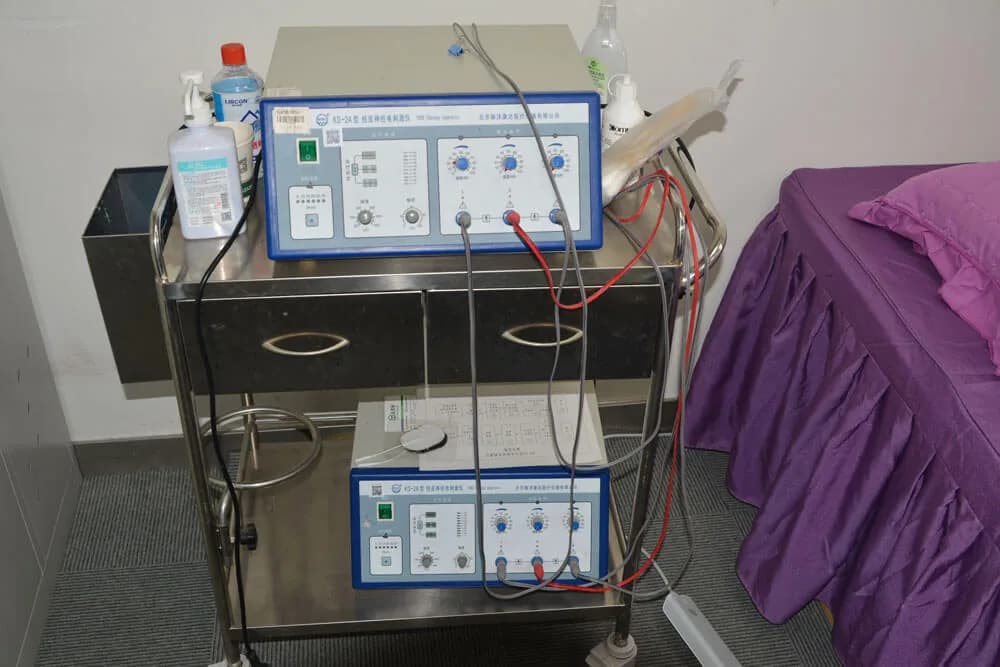
How the procedure works
Apparatus physiotherapy is a suite of eight modalities, each with its own indication and mechanism. (1) Tone-reduction physiotherapy uses low-frequency rectangular impulses and stimulation of tendon receptors. (2) Mid-frequency electrotherapy improves local circulation, trains muscles and has analgesic effect — indicated for weakness in limbs, back and abdomen. (3) Electronic meridian therapy restores nerve conduction in neuralgia, muscle atrophy and post-traumatic deficits. (4) Cerebellar stimulation accelerates brain blood flow via bioelectric impulses — used for paediatric brain injury, cognitive impairment, stroke and speech delay. (5) Sound-frequency resonance therapy reactivates damaged hair cells of the auditory nerve, indicated for sensorineural hearing loss. (6) Nerve damage physiotherapy restores motor function in partial or complete denervation. (7) Ultra-short-wave therapy treats inflammatory processes — pneumonia, bronchitis, arthritis. (8) Multifunctional limb physiotherapy uses low-frequency impulse current for sequential muscle stimulation in hemiplegia, paraplegia and equinus foot. The specific modality or combination is selected to fit the child's individual profile — diagnosis, age, comorbidities and tolerance.
Modality selection
The diagnosis, contraindications and the state of skin and nervous system are reviewed; one modality or a combination of the eight available is selected.
Procedure
Electrodes or emitters are placed, tolerance is monitored, parameters (frequency, amplitude, duration) are controlled. The child is engaged calmly throughout.
Progress check
Every five sessions changes are reviewed: muscle tone, pain, sensitivity. Parameters or modality are adjusted when needed.
How Sessions Look
Indications and contraindications
Indications
Contraindications
Who performs the procedure

Liu Jing刘晶
Head of the Physical Therapy Department. Specialization: foot and ankle, posture and gait

Ning Zhiyun宁志云
Physical Therapy Methodologist. Specialization: working with the dyskinetic form of cerebral palsy and spastic quadriparesis

Guo Jinpeng郭金鹏
Head of the Physical Therapy Department. Specialization: Bobath concept, Vojta therapy, PNF, conductive education (Peto method)
What diagnoses it helps with Apparatus Physiotherapy
Book a free consultation
A doctor will review your documents and provide recommendations within 30 minutes.