
Treatment of Scoliosis in Huizhou
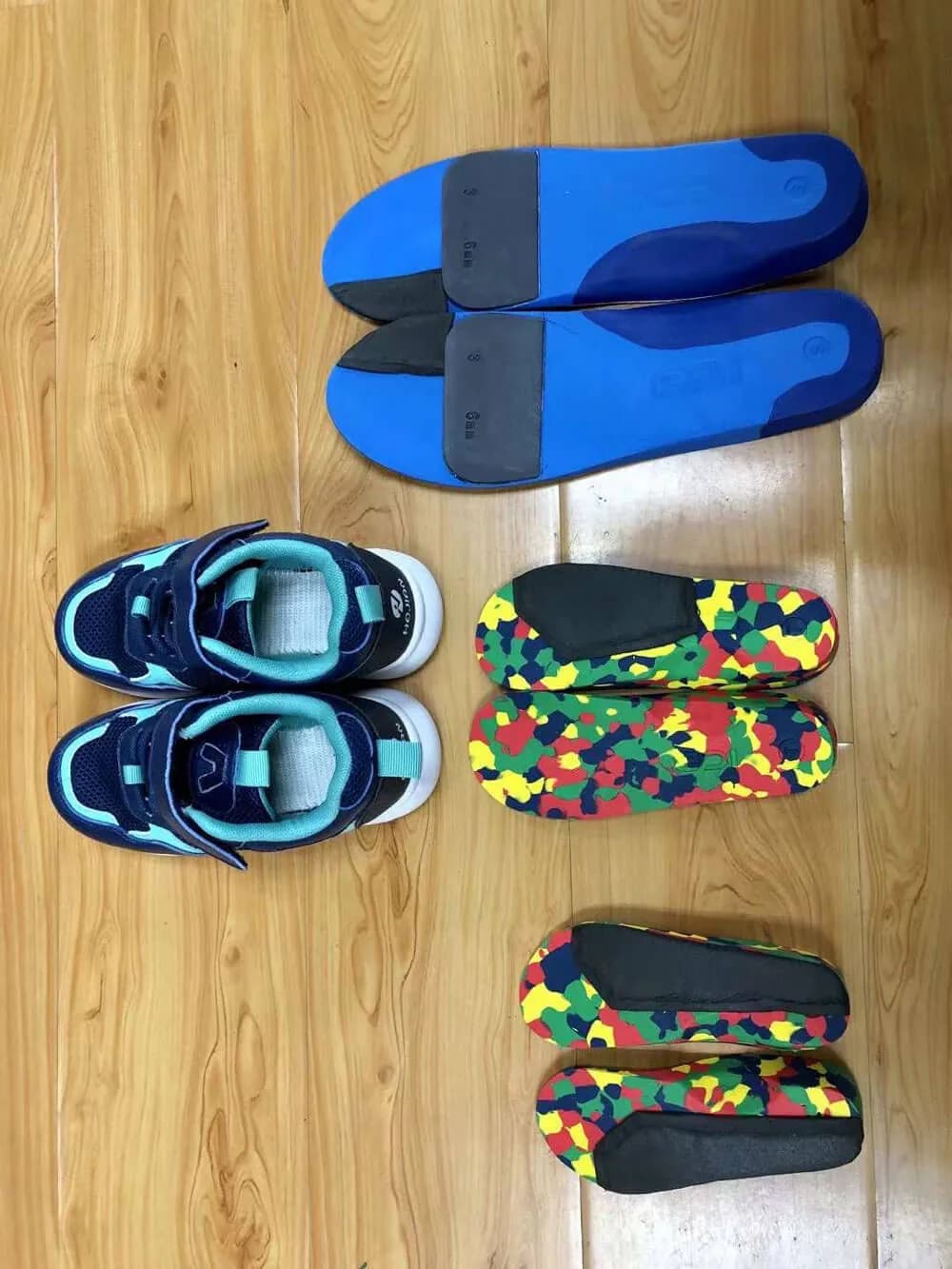
Scoliosis correction at NeuroLife Huizhou is built on 3D spinal scanning and the Italian posture assessment system. Custom orthoses are produced via CAD/CAM at the Yuncheng Orthopedic Research Institute and worn 18+ hours per day with a mandatory nighttime component — the most important element for correction during the active growth period.
What is Scoliosis?
Scoliosis is a three-dimensional deformity of the spine with lateral curvature and vertebral rotation. ICD-10 code M41 covers idiopathic, neuromuscular, congenital, and juvenile forms. Most pediatric cases are idiopathic (about 90%), manifesting during the pre-pubertal and adolescent growth period.
At NeuroLife Huizhou we follow the approach refined at the Yuncheng Orthopedic Research Institute. The program is built around a custom orthosis and tailored to the curve angle and skeletal maturity:
- Custom orthosis built with 3D modeling technology — the scan data is merged with the child's radiograph, and CAD/CAM production gives the most precise fit (unlike off-the-shelf braces);
- Mandatory nighttime component — during sleep muscle tone is reduced and tissue plasticity is at its peak, so it is the nighttime correction that delivers the most significant Cobb angle shift; the daytime orthosis supports posture and reinforces correct positioning patterns;
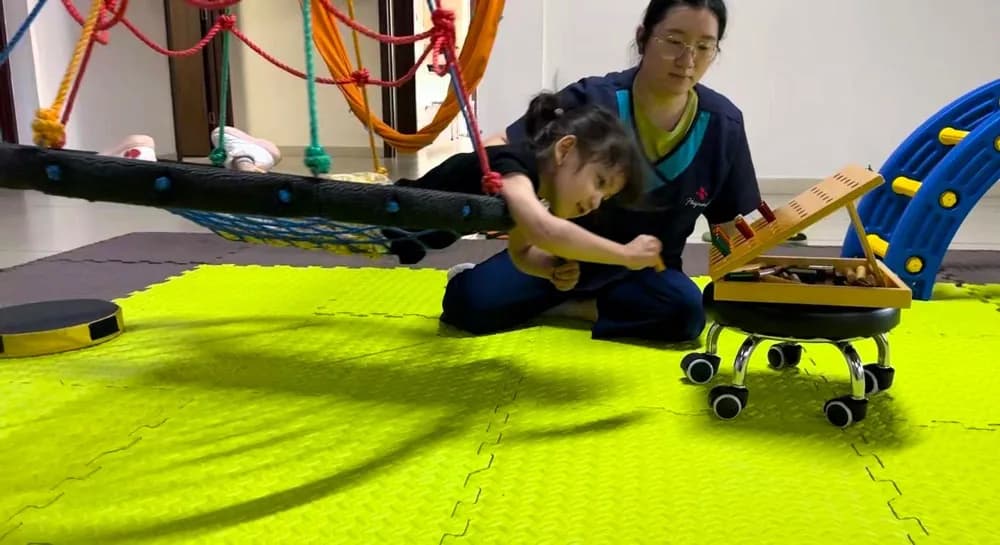
- Specialized therapeutic exercise — asymmetric Schroth-style exercises, breathing gymnastics, stabilizer muscle training;
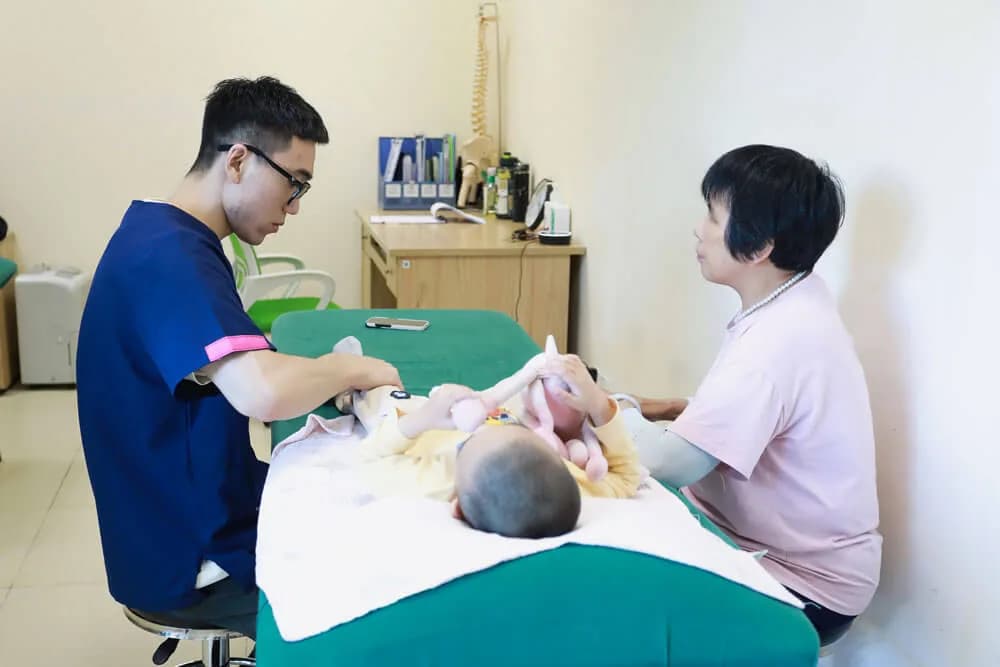
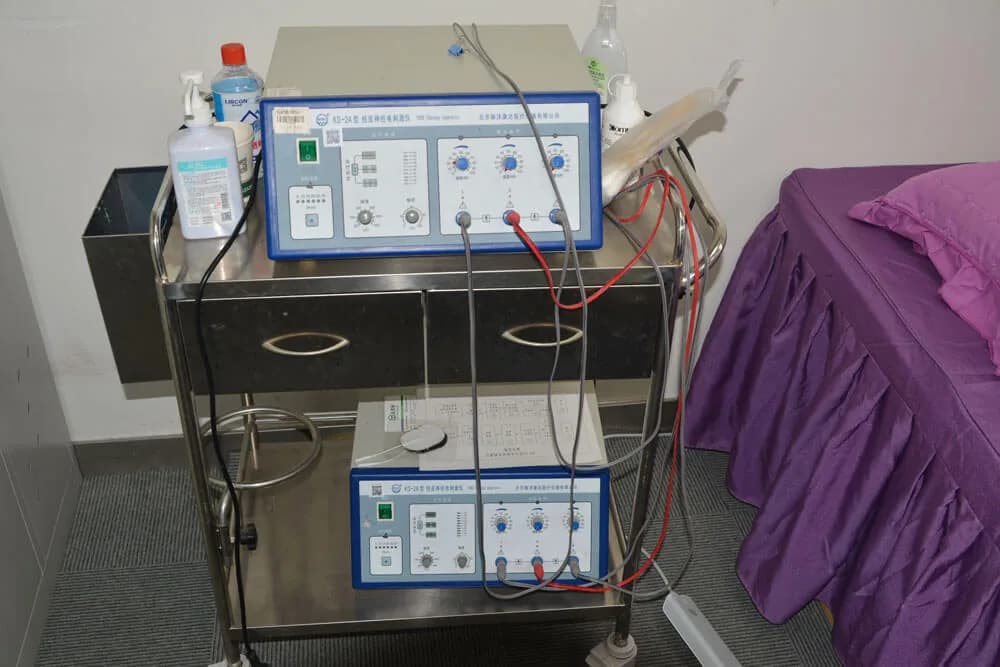
- Medical massage and physiotherapy — relieving tension and supporting muscle balance.
Tactics are determined by the Cobb angle and the time to skeletal maturity: with moderate angles correction is held conservatively, while severe and rapidly progressing forms near skeletal maturity warrant a discussion of surgery in a specialized clinic.
Causes
About 90% of scoliosis cases are idiopathic — no identified cause. The leading role is attributed to genetic predisposition and asymmetric growth in the pre-pubertal period. Less common are neuromuscular scoliosis (with CP, SMA, DMD), congenital (with vertebral malformations in Q67), syndromal (Marfan, Ehlers-Danlos), and postural scoliosis.
Symptoms
Asymmetry of shoulders, scapulae, or pelvis, a visible rib hump on forward bending (Adams test), curvature of the spinous process line, uneven clothing fit, back pain after activity in some children, and rapid fatigue. In severe forms — respiratory and internal organ dysfunction, headaches, and limited mobility.
Diagnostics
Standing-position spinal radiography with Cobb angle measurement (the gold standard), 3D postural scanning using the Italian assessment system, scoliometry (Adams test with an angle meter), and skeletal maturity assessment on the Risser scale (iliac crest ossification). Neuromuscular forms require neurological evaluation; suspected congenital scoliosis — spinal MRI or CT.
Prognosis
The decisive factor is early correction before skeletal maturity (Risser 4–5). With Cobb angles up to 25° therapeutic exercise and regular follow-up imaging are usually enough. At 25–40° a well-structured program with a custom orthosis halts progression and reduces the angle in some cases. Surgery is avoided in 85–90% of patients. After skeletal maturity scoliosis stabilizes but requires periodic monitoring in adult life.
How we treat
Diagnostics
Comprehensive examination and patient assessment by an international team of specialists
Treatment plan
Development of an individual rehabilitation program considering diagnosis specifics
Therapy
Intensive course of procedures: physical therapy, massage, physiotherapy, acupuncture and other methods
Results
Progress evaluation, home recommendations and maintenance therapy plan
Procedures for treating Scoliosis
Questions about treatment of Scoliosis
Related diagnoses
Other directions in this category — pick the most relevant one
Book a free consultation
A doctor will review your documents and provide recommendations within 30 minutes.