
Treatment of Valgus in Huizhou
Pediatric hallux valgus is an outward deviation of the foot axis with the heel turning into varus and the forefoot into pronation. It is common in isolation in children with hypermobility and also in children with spasticity from CP. In Huizhou we correct hallux valgus with custom medially supported insoles, orthopedic shoes, and exercise. In CP children — in tandem with primary-condition work.
What is Hallux Valgus?
It is important to immediately separate two entities: pediatric hallux valgus (ICD-10 M21.0) and adult hallux valgus (the classic bunion — outward deviation of the great toe). These are different clinical pictures. In children hallux valgus is primarily about whole-foot positioning: the heel turns into varus (rotation outward), the forefoot into pronation, and the longitudinal arch is reduced. The great toe in a child with hallux valgus may also deviate, but it is a secondary sign; the primary task is to place the foot correctly.
Pediatric hallux valgus comes in several variants. Idiopathic — on a background of connective tissue hypermobility, genetic predisposition, and weakness of the short foot muscles; it is common and corrects well conservatively. Spastic — in CP children where the valgus position arises from increased peroneal muscle tone and forefoot adduction; here parallel work with the core CP program is mandatory. Less common — congenital hallux valgus (vertical talus and other severe forms), which requires more serious treatment, sometimes surgery.
At NeuroLife Huizhou we build correction individually around the form of the valgus and the child's age. The program combines:
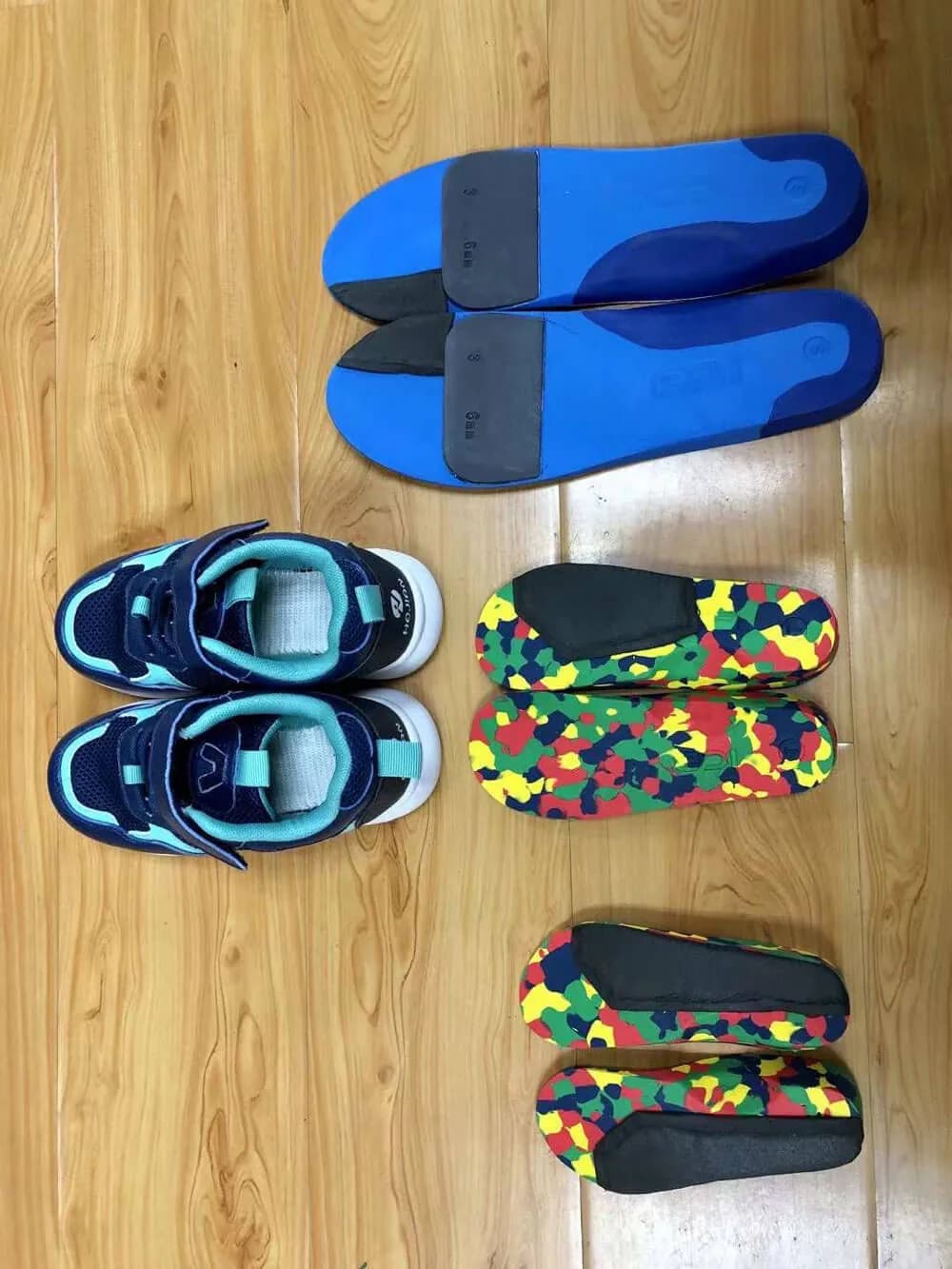
- Custom biomechanical insoles — with emphasized medial heel and arch support, made from a 3D foot impression with CAD/CAM modeling, each pair unique;
- Special orthopedic shoes — a rigid heel counter, an orthopedic last, and a sole with five support points;
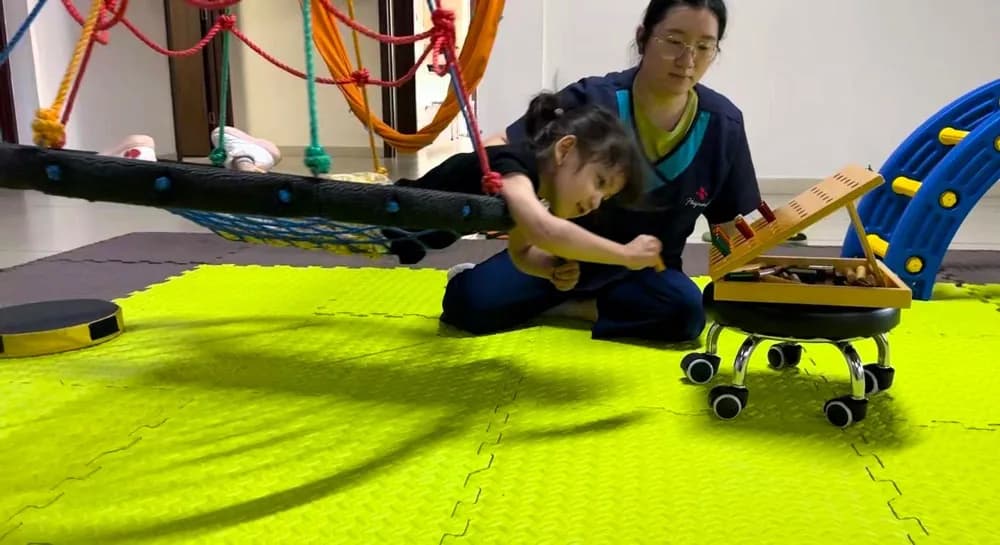
- Therapeutic exercise — strengthening of the short foot muscles, balance, proprioception;
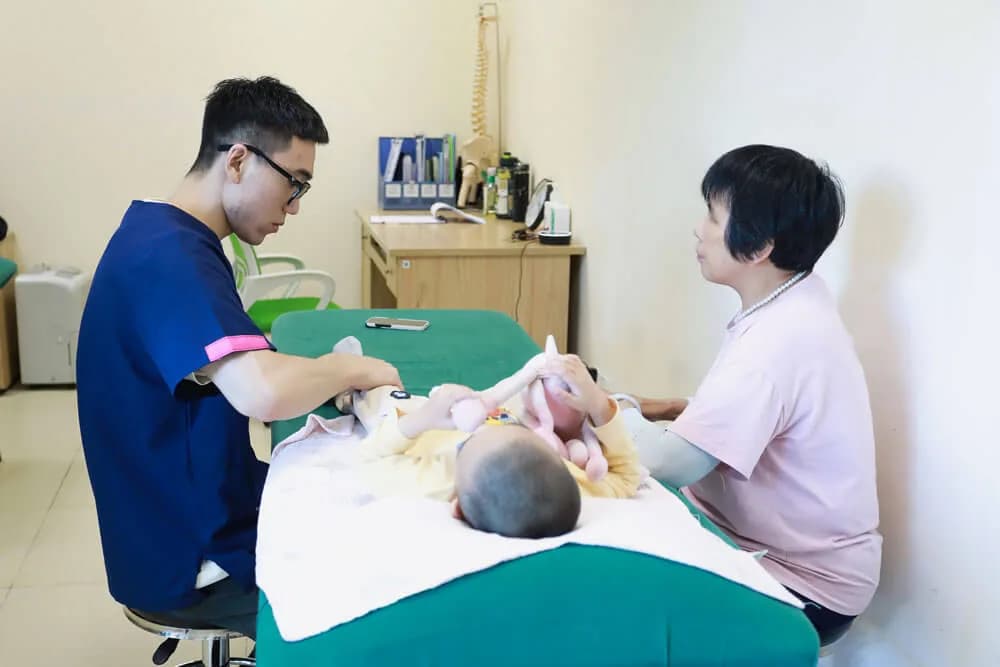
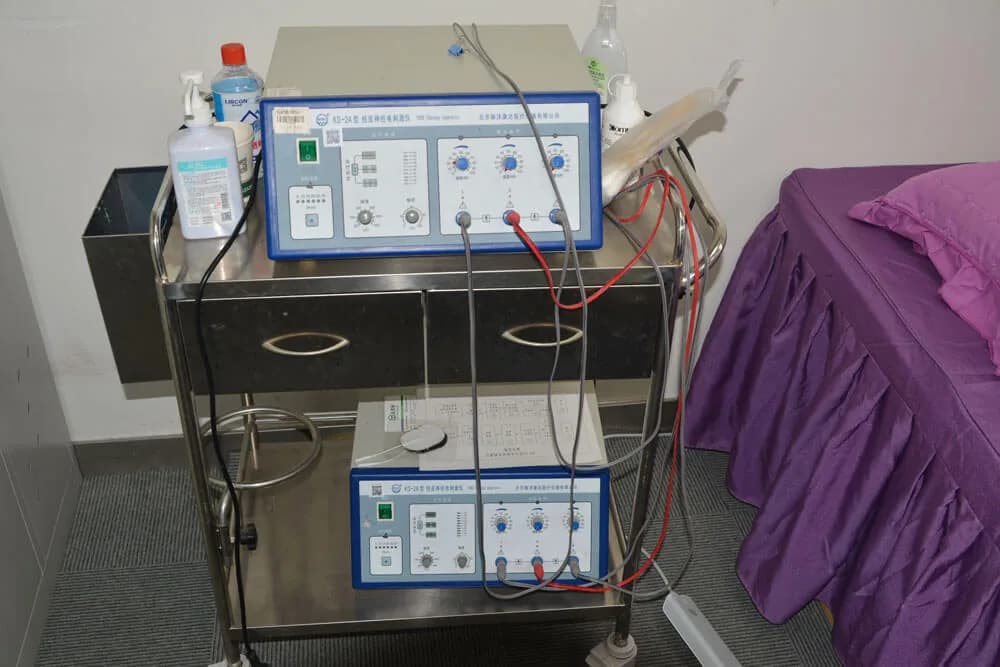
- Spasticity work — in CP children, in parallel: massage, physiotherapy, and acupotomy for tone reduction when needed.
In spastic hallux valgus, isolated orthopedic work without reducing tone yields limited effect, so foot correction is always tied to the core CP program.
Causes
Connective tissue hypermobility (Ehlers-Danlos syndrome, benign hypermobility), genetic predisposition, spasticity of leg and foot muscles in CP, congenital features (vertical talus, tarsal coalitions), post-traumatic conditions, wrong shoe choice in childhood (narrow shoes, high heels in adolescence).
Symptoms
Visible outward deviation of the foot axis, heel turn into varus (seen from behind), flattening of the longitudinal arch, uneven shoe wear on the inner side, pain in feet and shins after activity, rapid fatigue. In older children — medial bone protrusion at the first metatarsophalangeal joint (the bunion). In severe forms — gait abnormalities.
Diagnostics
3D foot scanning using the Italian system, plantography, podoscope examination, standing-position assessment from behind and front, gait analysis. With severe deformity or pain — standing-position foot radiography with angle measurement (first metatarsal angle, hallux valgus angle). In CP children — GMFCS staging and neurological examination.
Prognosis
With correction before age 6–7 — full reversibility in most cases: the foot returns to normal positioning. In children over 10 the program stabilizes the situation and prevents progression, though full realignment is not always achievable. Adolescents with fixed deformity and pain may need surgery. In CP children the prognosis depends on the severity of the primary diagnosis and program compliance.
How we treat
Diagnostics
Comprehensive examination and patient assessment by an international team of specialists
Treatment plan
Development of an individual rehabilitation program considering diagnosis specifics
Therapy
Intensive course of procedures: physical therapy, massage, physiotherapy, acupuncture and other methods
Results
Progress evaluation, home recommendations and maintenance therapy plan
Procedures for treating Hallux Valgus
Questions about treatment of Hallux Valgus
Related diagnoses
Other directions in this category — pick the most relevant one
Book a free consultation
A doctor will review your documents and provide recommendations within 30 minutes.