
Treatment of Clubfoot in Huizhou
Clubfoot treatment at NeuroLife Huizhou follows a modified Ponseti method — an author technique by Assoc. Prof. Liu Hejian from the Yuncheng Orthopedic Research Institute. The key difference is polymer bandages instead of traditional plaster: more comfortable for the child, easier to maintain, parents can remove them for bathing. Effectiveness has been proven in thousands of cases.
What is Clubfoot?
Clubfoot (talipes equinovarus, TEV) is a congenital three-plane foot deformity (ICD-10 Q66.0). It is one of the most common congenital musculoskeletal deformities, occurring on average in 1–3 newborns per 1000, more often in boys (2:1). The classic Ponseti method has remained the global gold standard for its treatment since the 1950s.
At the Yuncheng Orthopedic Research Institute under Assoc. Prof. Liu Hejian a modified version of the Ponseti method was developed in which traditional plaster is replaced with polymer bandages. At NeuroLife Huizhou we guide the child through this protocol:
- Polymer bandages instead of plaster — the material does not soften when wet, the skin suffers less, the bandage can be removed for bathing and reapplied; treatment tolerance and parental adherence to the regimen are markedly higher than with plaster;
- A series of staged casts — the foot is sequentially brought out of the deformity (cavus → adductus → varus → equinus), with 5–7 days between changes;
- Minimally invasive Achilles tenotomy — at the final stage when needed, a percutaneous technique refined at the Institute over decades;
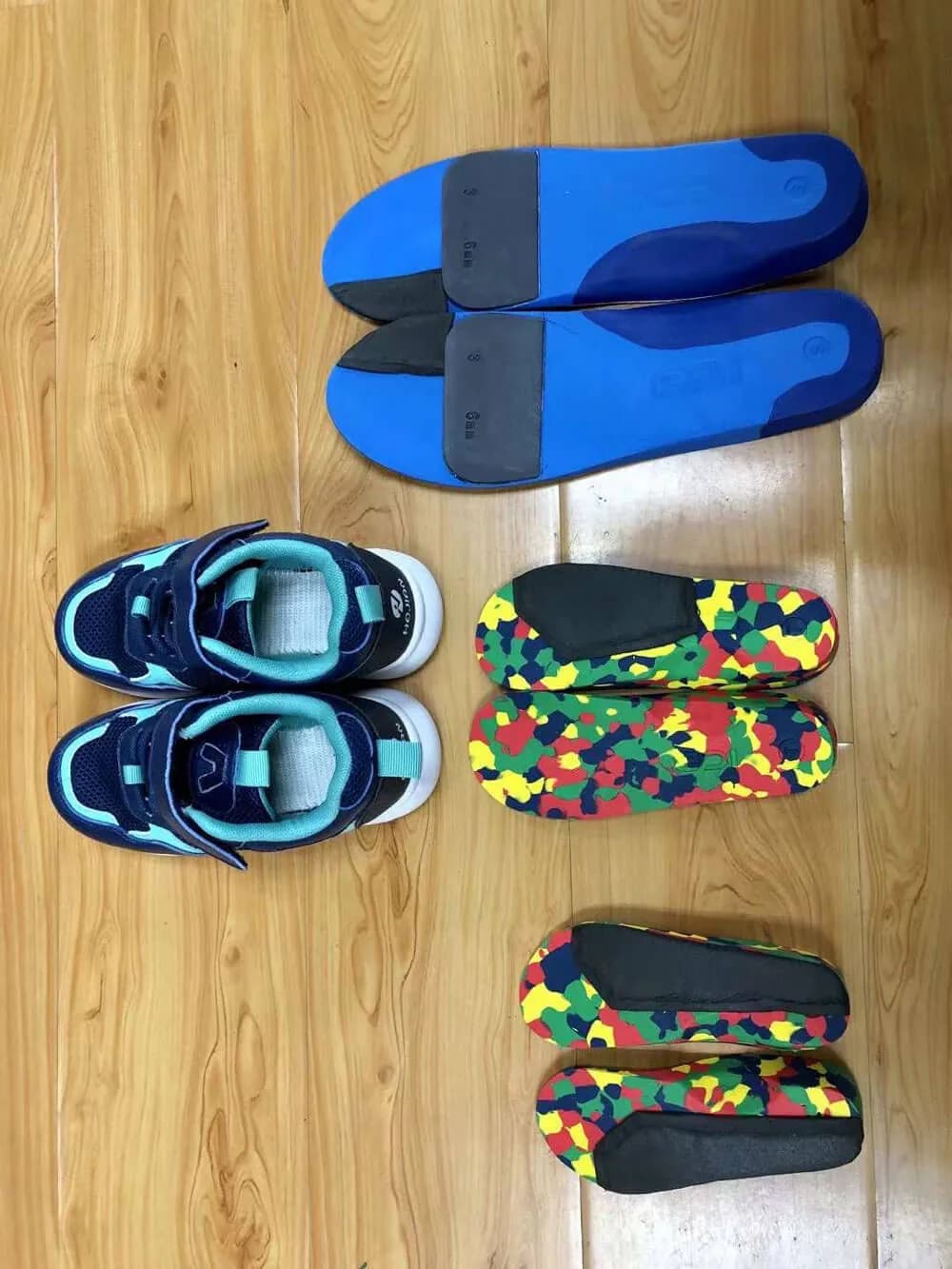
- Brown brace — after correction, two special shoes on a connecting bar hold the feet in the correct position during the consolidation stage.
The ideal time to start is the first weeks of life: the earlier, the higher the tissue plasticity and the faster correction is achieved. We also accept older children — their program is longer and more complex, but effective.
Causes
Clubfoot has a multifactorial etiology: a combination of genetic predisposition (risk is 17× higher with a family history), intrauterine positional factors (oligohydramnios, multiple pregnancy, breech), and early environmental influences. More common in boys (2:1). In some children clubfoot is an isolated deformity, in others — part of a syndrome (arthrogryposis, spinal dysraphism).
Symptoms
The deformity is visible at birth: foot drop (equinus), inward turn (varus), forefoot adduction, and a high arch (cavus). The foot is fixed in the pathological position and cannot be passively moved to neutral. The skin on the outer side is stretched, on the inner side it forms folds. With bilateral clubfoot the feet are turned inward so that the soles face each other. In untreated older children — abnormal gait with bearing on the outer foot border.
Diagnostics
The diagnosis is clinical at the first newborn examination. Deformity severity is graded on the Pirani scale (0–6 points): the higher the score, the more severe the deformity and the more treatment stages are needed. Prenatally clubfoot can be detected on fetal ultrasound from weeks 16–20. In older children with delayed diagnosis we add gait analysis (video), foot radiography, and evaluation for associated syndromes.
Prognosis
With an early start (within 1 month) and Brown brace compliance, foot function reaches near-normal — the child walks, runs, and participates in sports without restrictions. Clubfoot is one of those deformities that, with the right tactic, leaves almost no trace. The key risk is brace non-adherence: skipping or shortening wear time pushes recurrence above 50%. Older children with neglected forms need longer and more complex treatment, sometimes surgery.
How we treat
Diagnostics
Comprehensive examination and patient assessment by an international team of specialists
Treatment plan
Development of an individual rehabilitation program considering diagnosis specifics
Therapy
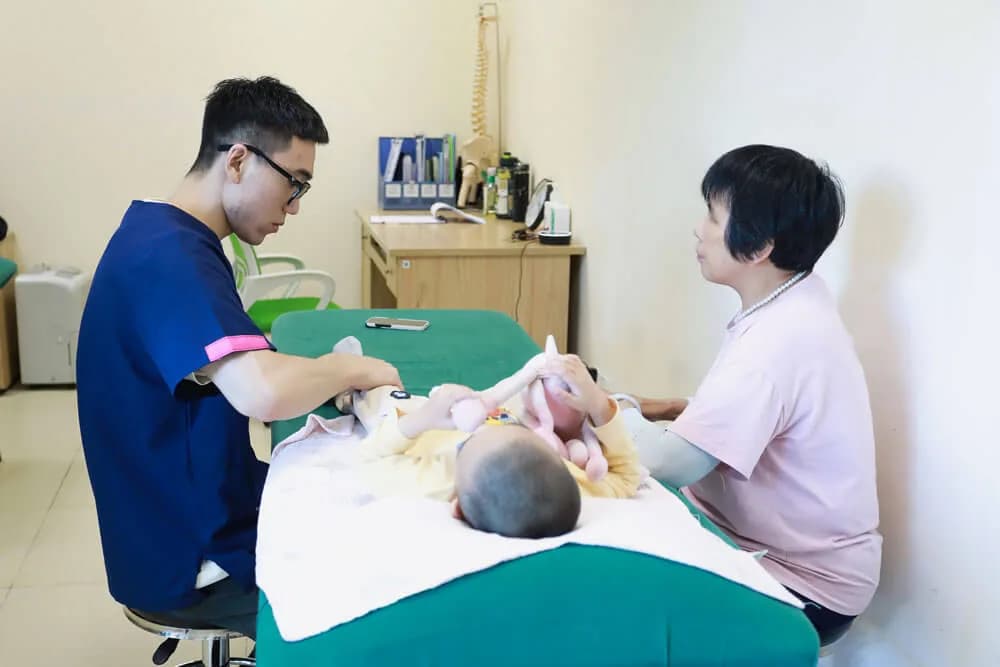
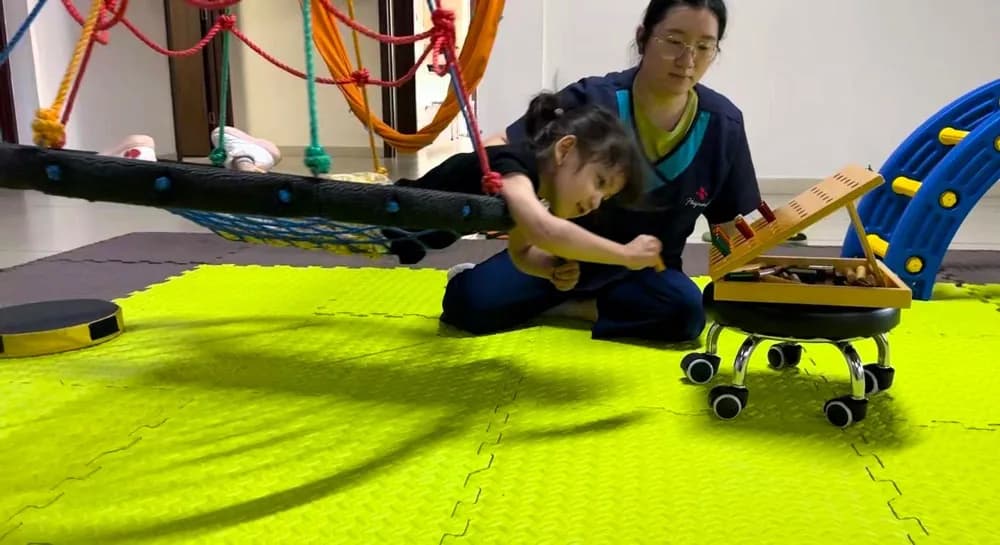
Intensive course of procedures: physical therapy, massage, physiotherapy, acupuncture and other methods
Results
Progress evaluation, home recommendations and maintenance therapy plan
Procedures for treating Clubfoot
Questions about treatment of Clubfoot
Related diagnoses
Other directions in this category — pick the most relevant one
Book a free consultation
A doctor will review your documents and provide recommendations within 30 minutes.