Treatment of X/O legs in Huizhou
Genu varum (bow legs) and genu valgum (knock knees) are corrected at NeuroLife Huizhou with a combined method: modified Ponseti technique by Assoc. Prof. Liu Hejian for lower-limb deformities and custom biomechanical insoles. It is important to distinguish physiological age-related dynamics from pathology — varus is normal until age 2, valgus between 3–6 years.
What is Genu Varum & Genu Valgum?
Lower-limb deformities in children come in two opposite types. Genu varum (bow legs) — knees splayed outward, thighs and shins forming an arc with a gap between knees. Genu valgum (knock knees) — knees come together, shins splay outward. Both forms map to ICD-10 M21.0 (valgus) and M21.1 (varus).
The key for parents and clinicians is understanding the physiological age-related dynamics. In newborns and infants a slight varus position (O-shape) is normal and persists until about age 2. Then the leg gradually straightens, and at ages 3–6 the norm shifts to physiological valgus (X-shape) due to bone growth specifics. By ages 6–8 the leg axis approaches the near-adult norm. Only when the deformity exceeds the age-appropriate norm, persists longer than expected, or progresses — does it warrant correction.
At NeuroLife Huizhou we apply a combined approach tailored to the type and degree of deformity:
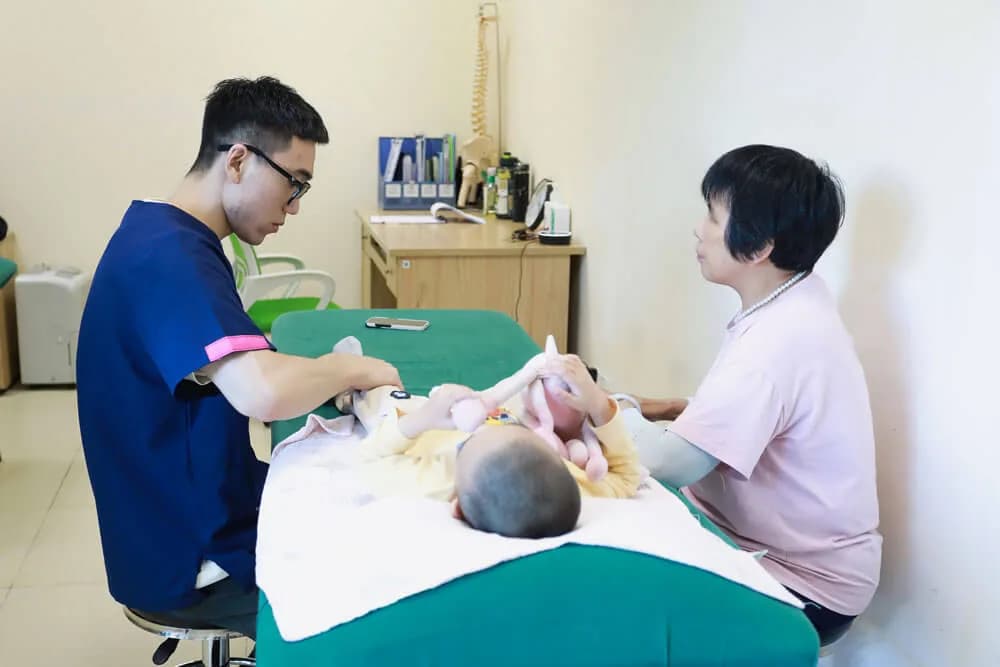
- Modified Ponseti by Assoc. Prof. Liu Hejian — the main technique; originally created for clubfoot, it was adapted to gradually correct genu varum and valgum: a series of bandages and fixations at 5–7 day intervals gently moves the leg axis to neutral by exploiting tissue plasticity. Minimally invasive, without surgery;
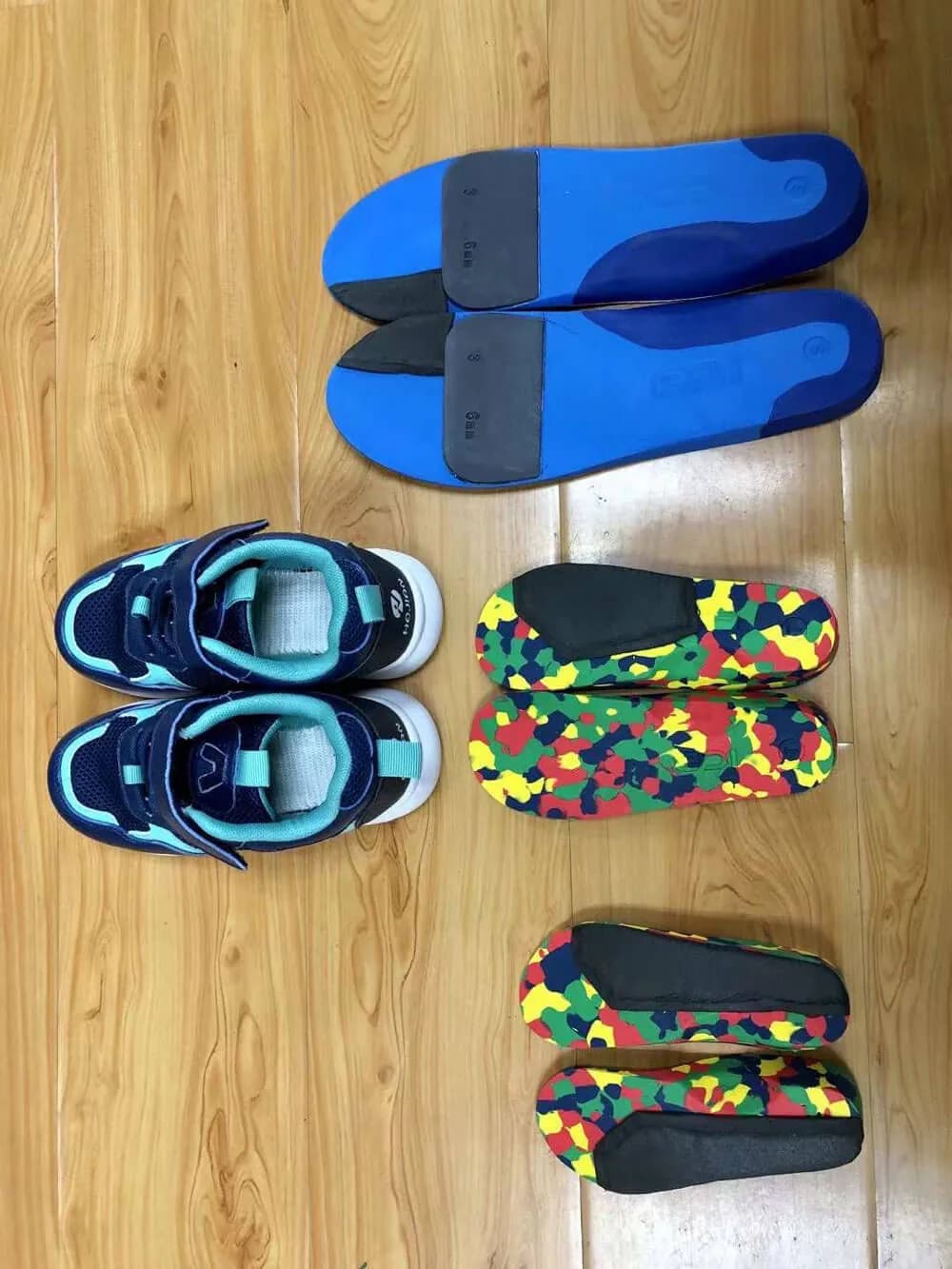
- Custom biomechanical insoles — especially with combined foot deformity (most children with genu varum/valgum have valgus or flat feet); they realign the axis below the knee and reduce load on the joint;
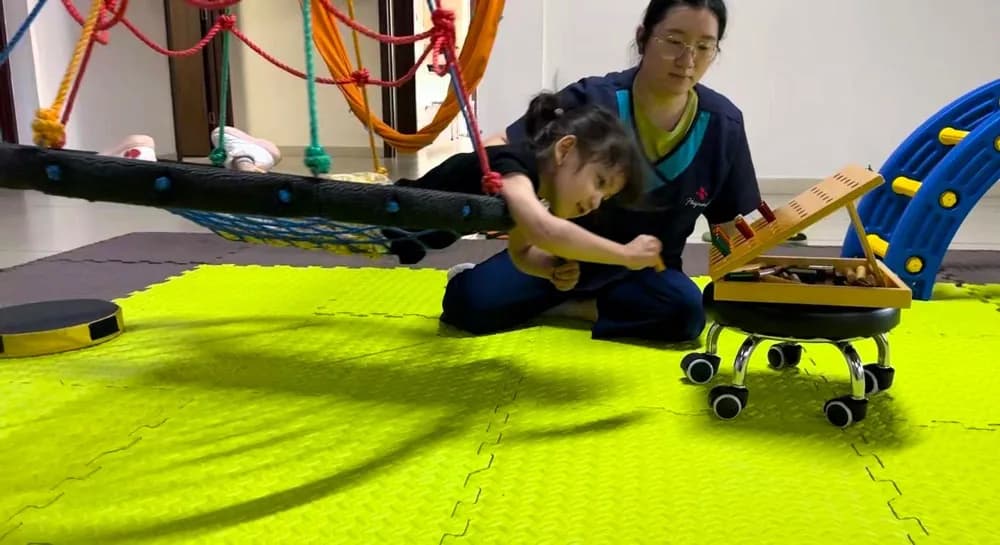
- Specialized therapeutic exercise — strengthening of the knee stabilizer muscles, balance exercises;
- Massage and physiotherapy — support of muscle balance.
For severe fixed forms, referral to a specialized orthopedic hospital for staged correction or surgery is discussed (for example, temporary hemiepiphysiodesis — installing a stop plate that gradually straightens the axis with growth).
Causes
Physiological — age-related growth specifics (varus up to age 2, valgus at ages 3–6 — normal). Pathological: rickets and vitamin D deficiency, post-traumatic conditions (growth plate injury), congenital bone dysplasias (Blount disease for varus, skeletal dysplasias for valgus), neuromuscular diseases (CP, SMA), genetic factors. Less common — metabolic disturbances, prior infectious bone involvement.
Symptoms
Visible leg deformity in standing (gap between knees in varus, between ankles in valgus), leg asymmetry (in unilateral deformity), gait disturbances, sometimes knee pain after activity, rapid fatigue. In some children — compensatory flat feet or foot valgus. In severe forms — functional limitations (running and sports difficulties).
Diagnostics
Clinical examination with intercondylar distance measurement (for varus) and intermalleolar (for valgus), gait assessment, plantography to evaluate associated foot deformities. In severe forms or suspected pathology — full-length standing leg radiography (full mechanical axis from hip to ankle) with angle measurements. Lab work — vitamin D, calcium, phosphorus levels. For neuromuscular forms — neurological examination.
Prognosis
With early correction (before age 6–7) — full leg axis realignment in most cases. In older children the program stabilizes the situation and prevents progression. In adolescents with fixed severe deformity surgery is discussed (hemiepiphysiodesis or corrective osteotomy). Without correction — elevated risk of knee osteoarthritis in adulthood, chronic pain, and spine problems.
How we treat
Diagnostics
Comprehensive examination and patient assessment by an international team of specialists
Treatment plan
Development of an individual rehabilitation program considering diagnosis specifics
Therapy
Intensive course of procedures: physical therapy, massage, physiotherapy, acupuncture and other methods
Results
Progress evaluation, home recommendations and maintenance therapy plan
Procedures for treating Genu Varum & Genu Valgum
Questions about treatment of Genu Varum & Genu Valgum
Related diagnoses
Other directions in this category — pick the most relevant one
Book a free consultation
A doctor will review your documents and provide recommendations within 30 minutes.