
Speech Therapy
Comprehensive speech therapy: articulation, vocabulary, comprehension, grammar, pragmatic use of language.
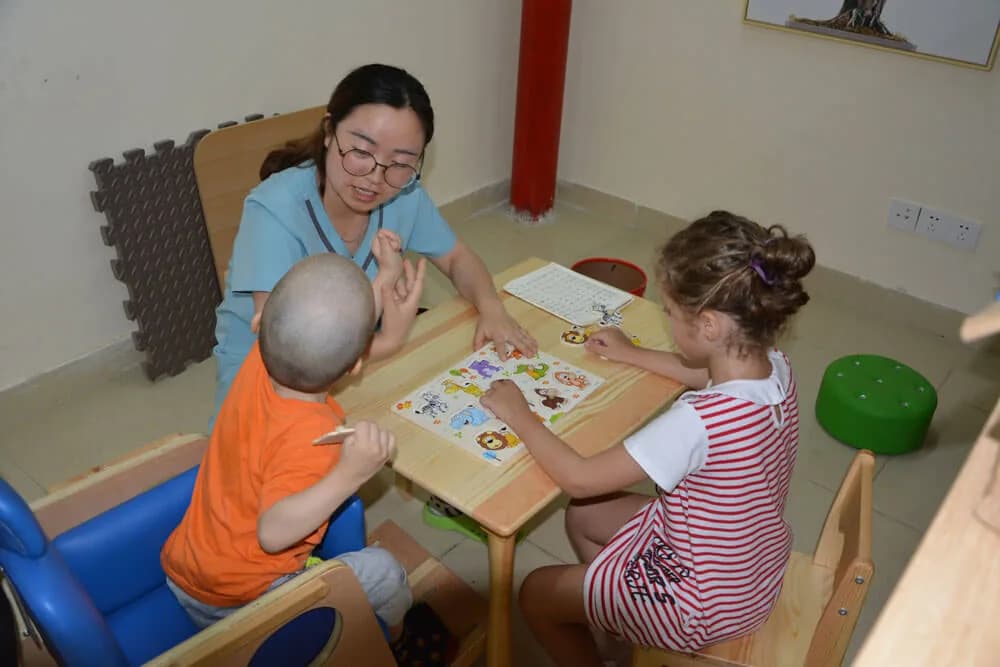
How the procedure works
Speech therapy (ST) addresses the full chain of language development: perception, comprehension, articulation, vocabulary, grammar and pragmatic use of language. The programme has five strands. First — articulation: training the motor apparatus of speech (lips, tongue, jaw, soft palate). Second — vocabulary growth, both active and passive. Third — auditory comprehension of instructions, questions and narratives. Fourth — sentence coherence and grammatical accuracy. Fifth — practical use of language in dialogue, storytelling and discussion. In complex cases (severe speech-language delay, autism, post-TBI) the programme is supplemented with accompanying methods: cranial acupuncture, physiotherapy, occupational therapy and sensory integration — the mix is determined individually for the child's profile. In Huizhou speech therapy runs in sync with PT, OT, sensory integration and pharmacological support, ensuring a unified programme for each child.
Speech assessment
Standardised testing of articulation, vocabulary, comprehension and grammar is performed, identifying the current level and zone of proximal development.
Training
Articulation exercises, phonetic drills, imitation, play-based interaction, shared reading and retelling — delivered in a child-friendly format.
Home language environment
Parents learn how to build a supportive language environment: expand the child's utterances, read aloud and run short daily exercises.
How Sessions Look
Indications and contraindications
Indications
Contraindications
Who performs the procedure

Xiang Kunrou向坤柔
Instructor. Specialization: Speech Therapy (ST)
What diagnoses it helps with Speech Therapy
Book a free consultation
A doctor will review your documents and provide recommendations within 30 minutes.