
CME Therapy
A method developed by Ramón Cuevas in the 1970s. Over 3,000 biomechanical exercises activate innate verticalisation programmes.
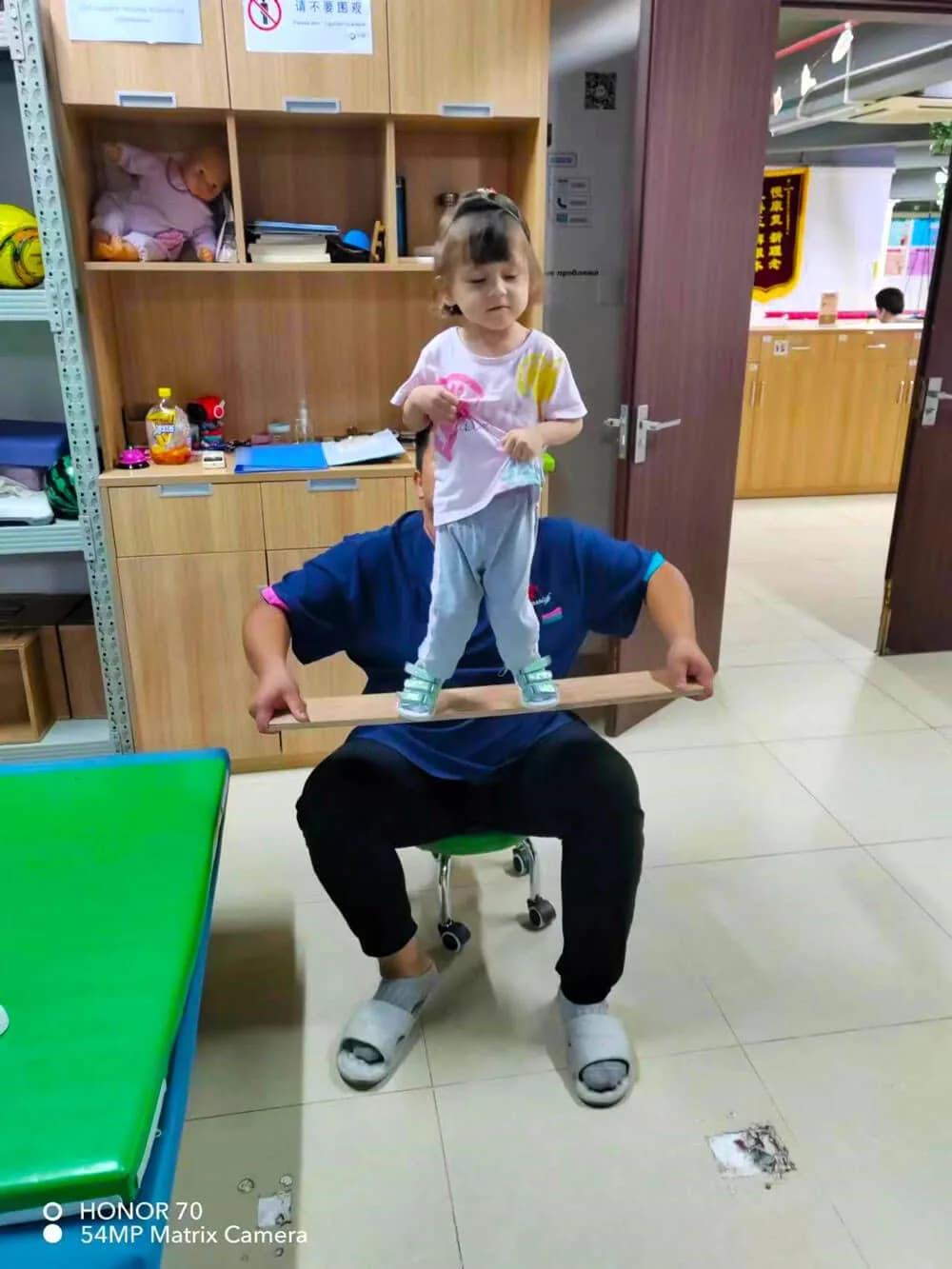
How the procedure works
CME (Cuevas Medek Exercise) is a method of dynamic motor activation for young children whose motor development is delayed by non-progressive CNS syndromes: cerebral palsy, Down syndrome, hydrocephalus, ataxia, spinal dysraphism. MEDEK is a Spanish acronym meaning «Specific Kinesthetic Stimulation of Development». Unlike conventional physical therapy that strengthens muscles through voluntary exercise, CME places the child in biomechanical conditions that compel the nervous system to activate automatic postural reactions. The programme spans more than 3,000 exercises, each a separate task with increasing complexity.
MEDEK assessment
The level of motor programmes is recorded, the starting point is identified and an individual set of exercises from the method is assembled.
Training
Biomechanical conditions are created in which the child independently performs increasingly complex exercises, with parents trained alongside.
Integration
The programme continues at home: parents perform the recommended exercises daily. Follow-up sessions every 7–10 days track and document progress.
How Sessions Look
Indications and contraindications
Indications
Contraindications
Who performs the procedure

Yang Chaohai杨朝海
Physical Therapy Specialist. Specialization: CME therapy (MEDEK), gross motor skills

Li Zhongshuo李钟硕
Instructor. Specialization: physical therapy (PT), CME therapy (MEDEK), dynamic activation of active movements.

Wang Chengzhi王成智
Specialization: CME therapy (MEDEK), gross motor skills
What diagnoses it helps with CME Therapy
Book a free consultation
A doctor will review your documents and provide recommendations within 30 minutes.