
Sensory Integration
SIT helps the child's brain process signals from the senses correctly — the foundation of learning, motor function and behaviour.
How the procedure works
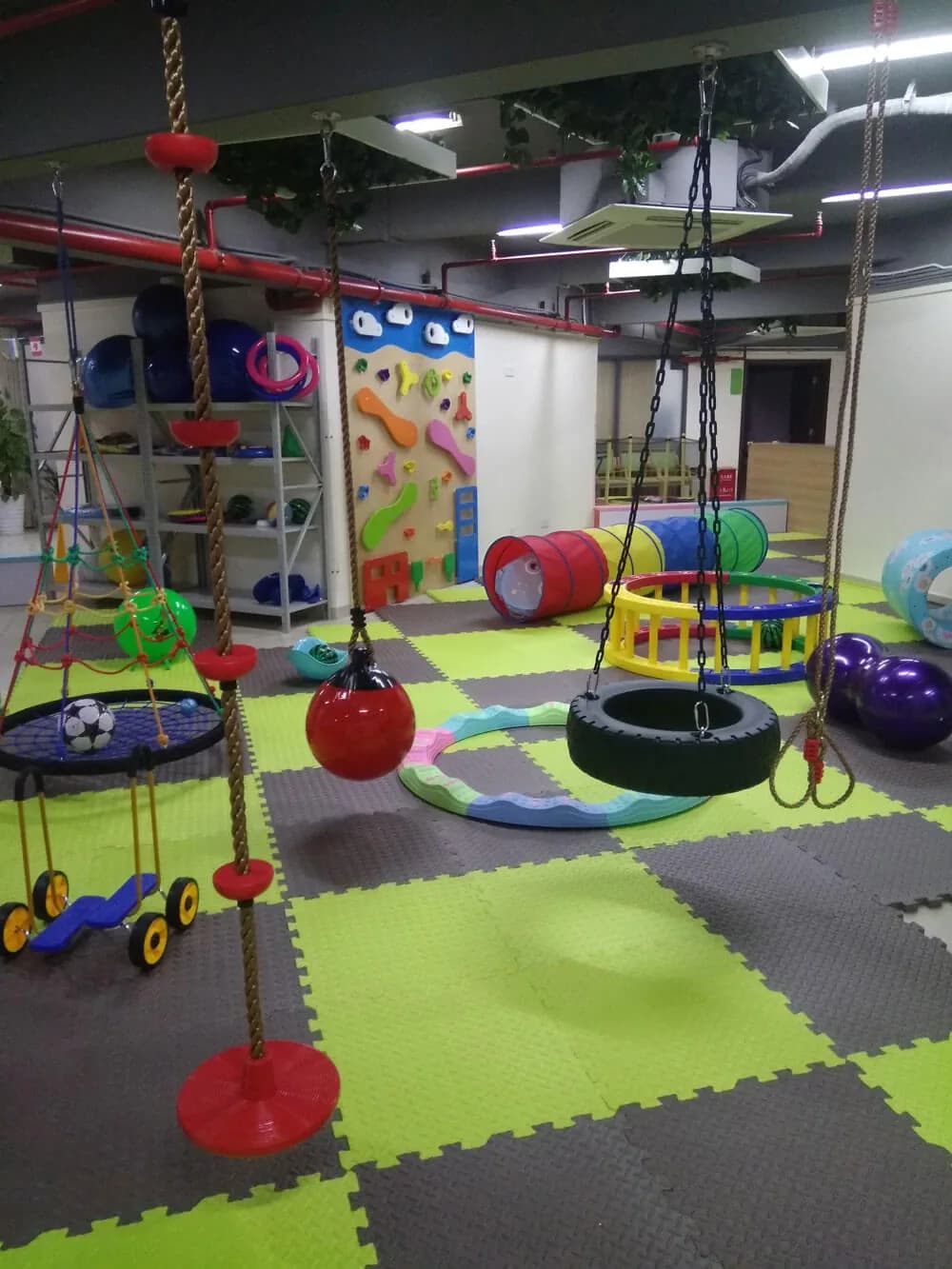
Sensory integration (SIT) is the process by which the child's nervous system receives signals from touch, vestibular, proprioceptive, olfactory, visual, auditory and taste receptors and then organises and interprets them to produce an appropriate response. In children with cerebral palsy, autism, speech-language delay or ADHD this process is often disrupted: the child cannot keep balance, refuses certain textures, cannot tolerate noise. SIT sessions in Huizhou take place in a dedicated sensory gym — trampolines, swings, weighted vests, balance boards, tactile pathways. The programme is tailored to age, diagnosis and the child's preferences; all seven sensory systems are engaged, sessions are play-based and never coercive.
Sensory profile
All seven sensory systems are assessed, hypo- and hyper-reactivity are identified, and behaviour in real-life situations is recorded via parent interview.
Play sessions
Sessions take place in the sensory gym with trampolines, swings, balance boards and tactile elements. The child receives metered sensory stimulation.
Carry-over
Parents learn how to embed sensory breaks throughout the day: rocking, a weighted blanket, tactile toys. A reassessment is performed every four weeks.
How Sessions Look
Indications and contraindications
Indications
Contraindications
Who performs the procedure

Shen Lu沈禄
Head of the Sensory Integration Department. Specialization: comprehensive sensory integration therapy

Zeng Yujie曾钰捷
Instructor. Specialization: occupational therapy (OT)
What diagnoses it helps with Sensory Integration
Book a free consultation
A doctor will review your documents and provide recommendations within 30 minutes.