
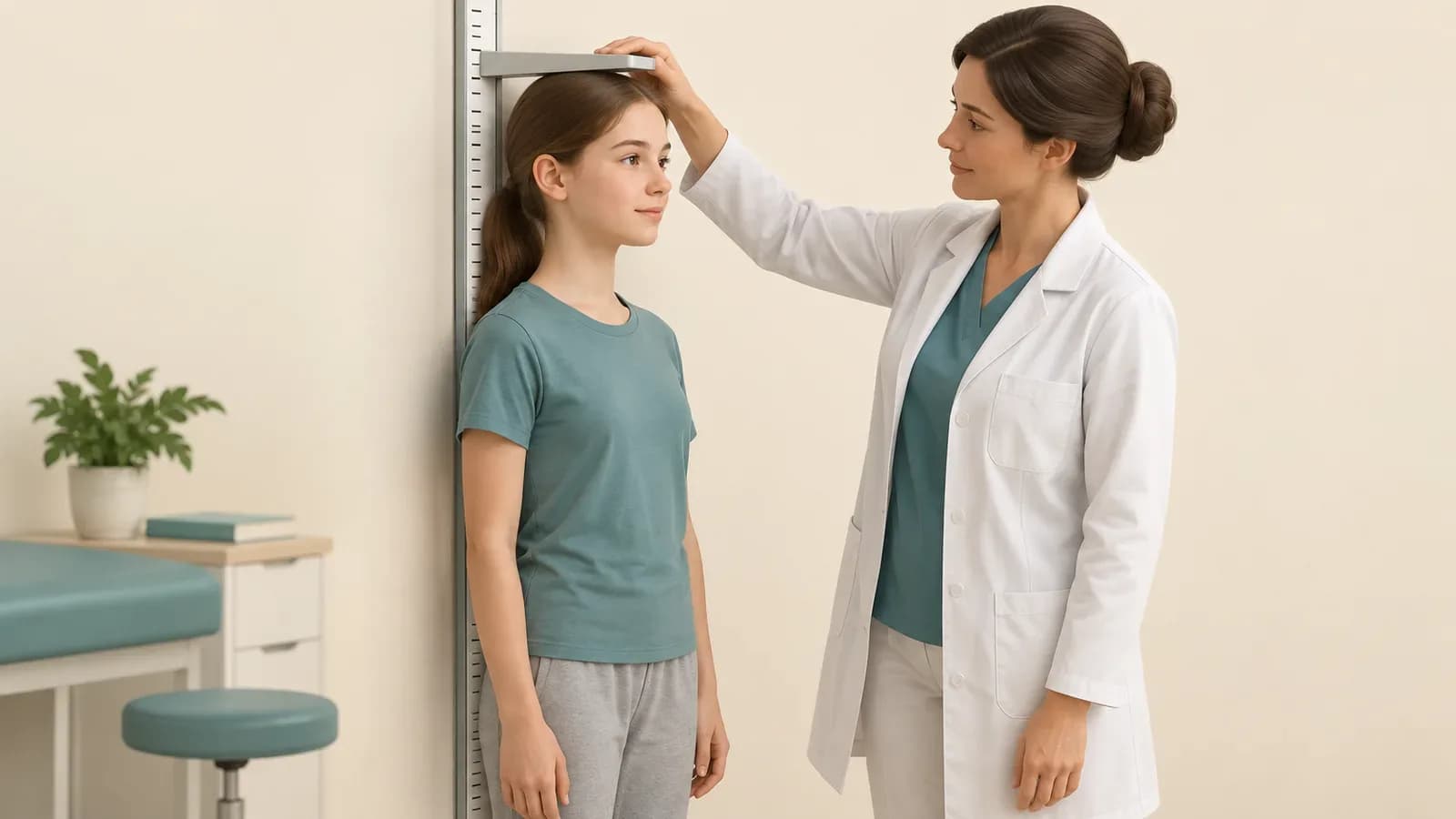
If one shoulder sits higher than the other or a shoulder blade looks more prominent, arrange an in-person assessment. A photograph cannot tell you whether your child needs a brace or which exercises are appropriate. When scoliosis has already been diagnosed, the next step is to understand the findings and agree on follow-up. Decisions depend on the type and size of the curve, growth remaining and changes over time.
An uneven back needs an assessment
Uneven shoulders, a prominent shoulder blade or an uneven waist can be signs of scoliosis. A clinician examines the body from different angles and during a forward bend. Spinal X-rays may be requested after the examination. The Scoliosis Research Society describes the diagnostic process.
Explain when you noticed the changes and what concerns your child. Mention pain separately rather than assuming scoliosis explains it. Bring existing assessments if you have them. There is no need to arrange repeat X-rays or additional tests on your own before the consultation; first check what the clinician needs.
Understanding the Cobb angle and growth
The Cobb angle measures spinal curvature on an X-ray. The number alone does not describe the whole situation. The location of the curve, the type of scoliosis, growth remaining and comparison with earlier assessments also matter.
“Idiopathic” means the precise cause is unknown. Scoliosis can also be congenital or associated with conditions affecting nerves and muscles. AAOS explains these different forms. A plan for an adolescent with idiopathic scoliosis cannot automatically be applied to a younger child or a child with cerebral palsy.
Ask the clinician to relate the findings to a decision: what needs attention now, what will be monitored and what might change the next step. A severity label without the other findings does not answer these questions. The complete report is more useful for this discussion than a single number sent in a message.
Observation means an agreed follow-up plan
Not every child with scoliosis needs a brace or surgery. Observation may be appropriate for smaller curves. It involves repeat examinations and, when prescribed, X-rays to assess changes. SRS describes observation as a management option.
Confirm the next appointment and keep the date with the report. Ask which changes should be reported sooner and whom to contact between visits. Keep previous images and reports so the team can assess the course of the condition, rather than only the latest examination. Photographs may help you explain something you have noticed, but they do not replace a clinical assessment.
If a brace is proposed: the prescription and daily life
A scoliosis brace is used for some growing children to limit progression of the curve. The choice depends on the curve and the child's circumstances. SRS explains the aim of bracing and the importance of following the prescribed schedule. This is not a promise to make the spine completely straight.
Before brace wear begins, the family needs clear answers:
- Why is a brace being proposed now, and what outcome will be assessed?
- Who is responsible for fitting it, checking the fit and making adjustments?
- What schedule is prescribed for this child, and when will it be reviewed?
- What should we do about discomfort, and how can we contact the specialist?
- How should we organise school, sleep, washing and physical activity?
Include your child in the discussion so practical difficulties can be addressed early. Do not choose wearing hours from another family's experience. If the prescription is difficult to follow, discuss the reason with the team and agree on a response.
What are exercises intended to achieve?
Physical activity remains important for children with scoliosis. General exercise and a programme of specific exercises serve different purposes. NHS guidance describes the benefits of activity and uncertainty about its effect on the curve itself.
If exercises are proposed, ask about their purpose: maintaining activity, working on movement or another specific goal. Request a demonstration and an explanation of how progress will be assessed. The name of an exercise approach does not establish that it is appropriate for your child. Do not replace a prescribed brace with exercises without agreement from the clinician.
For a substantial or progressively worsening curve, the team may discuss surgery. A consultation helps clarify the options. A promise that surgery can definitely be avoided cannot account for every child's situation.
What to clarify before contacting NeuroLife
If you are considering NeuroLife, first ask whether your child's case can be considered and how to share existing reports. It is useful to ask who would assess the scoliosis, what goals might be proposed and how follow-up would continue after returning home.
Before deciding to travel, clarify which services are available for your child's situation. General information about braces and exercises does not confirm that a particular method is available at the centre. The existing follow-up plan also needs to be considered when discussing rehabilitation abroad.