
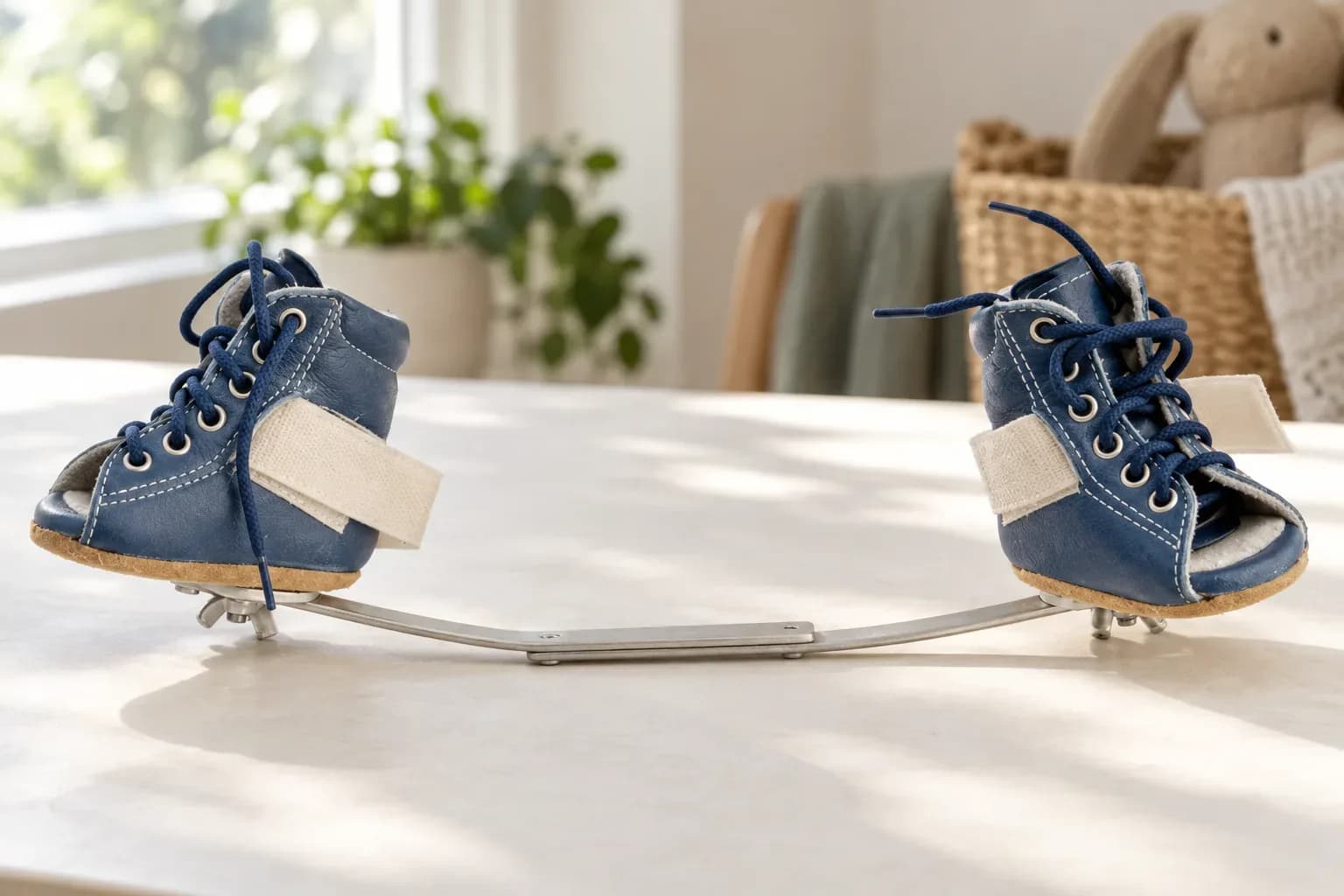
A brace: two boots and a connecting bar. AI illustration based on a Denis Browne brace reference; not a NeuroLife product model or adjustment instructions. Device reference: Ignacio Ponseti Foundation.
After clubfoot correction, a brace helps maintain the corrected position of the foot. A foot that looks straight is therefore not, on its own, a reason to stop bracing. This stage involves following the orthopaedic team's schedule, paying attention to fit and continuing follow-up. At NeuroLife, families receive a written wearing schedule and an in-person demonstration of how to put on the brace and check its fit before leaving.
This article concerns bracing after correction of congenital clubfoot. It does not set a schedule for other foot conditions or replace an individual prescription.
Why bracing continues after correction
Correcting the position of the foot and maintaining that correction are separate stages. Clubfoot has a tendency to return after correction; this is called a relapse. A brace holds the foot in the prescribed position as the child continues to grow. The American Academy of Orthopaedic Surgeons, AAOS, explains this role of bracing.
Following the prescription matters, but it is not an absolute guarantee. AAOS notes that relapse can occur even with proper brace use. When a problem arises, the family needs an orthopaedic assessment, not blame.
Decisions about changing or ending brace use therefore belong within the child's medical plan. Appearance alone cannot determine whether bracing is complete.
What a foot abduction brace does
A foot abduction brace, often called boots and bar, consists of special shoes or sandals connected by a bar. Its components hold the feet in a prescribed position; it is different from ordinary footwear. NeuroLife refers to the device it uses as a Denis Browne brace.
Size, settings and the wearing schedule are connected. The clinician selects the device and prescribes a schedule for the individual child. A timetable found online, even in a hospital leaflet, does not replace that prescription.
The orthopaedic team familiar with the child's feet determines the abduction angles, bar length and when bracing can end. NHS guidance also emphasises following the agreed plan and continuing checks.
Bringing bracing into the home routine
At NeuroLife, families are shown in person how to put on the brace and check the fit. They also receive the wearing schedule in writing. The demonstration explains how to handle the device; the schedule guides brace use after departure.
A child may need time to adjust at the start. When the prescribed stage involves wearing the brace during sleep, a consistent bedtime routine can help make it part of familiar preparations for bed. This advice comes from the Royal National Orthopaedic Hospital, RNOH.
Adjustment should not be used to explain away every difficulty. Pay attention to the skin and whether the foot stays inside the boot. Follow the fit-checking demonstration provided with the child's device: an article cannot assess an individual brace.
If putting on the brace becomes difficult, describe what is happening to the clinician rather than choosing new settings yourself. “The foot has slipped out several times” is an observation. “The brace is no longer needed” is a medical conclusion that cannot be drawn from that observation.
When the brace seems uncomfortable
“My child will not wear the brace” can describe several different situations: unusual distress, a foot slipping out, marks on the skin or skin damage. These observations deserve attention rather than being dismissed as difficult behaviour.
Contact the treating team about pain, skin damage or repeated slipping for assessment and advice on further brace use. Do not try to resolve the problem by changing the angles, bar or wearing schedule yourself. Repeated slipping needs assessment, but it does not by itself establish a relapse. AAOS identifies it as a reason for medical attention.
If the prescribed routine has become unmanageable, ask the treating team what to do next. Do not change the schedule or add hours to make up for missed use on your own.
Bracing and follow-up at NeuroLife
At NeuroLife, Liu Hejian is responsible for the bracing stage and determines the size and abduction angle. When another clinic has carried out the correction, further care and any need for additional correction are decided at an in-person assessment. A previous course does not automatically mean a visit can be limited to brace fitting.
The clinic sells the Denis Browne brace separately. Before departure, the family receives a written wearing schedule and an individual demonstration of putting on the brace and checking its fit. Buying the device and receiving a prescription are distinct: possession of a brace does not establish how a particular child should wear it.
Once home, the family contacts the treating clinician directly. The clinician reviews photographs and videos of the feet and brace. This lets the family share observations, but cannot replace an in-person assessment in every situation.
When a child outgrows the brace, the family buys the next size locally on the clinician's recommendation. The clinic reports that it does not have an established practice of replacing broken devices.
The written schedule and demonstration support continuation at home. Photographs and videos provide material for discussing difficulties with the clinician. Decisions about the feet and future brace use remain medical decisions.
Contacting NeuroLife
If you are considering NeuroLife after clubfoot correction, its Russian-speaking manager can discuss arrangements for a visit and in-person assessment. Direct pain, skin damage or problems with an already prescribed brace to the treating team.